Book Now

Swayambhunath and Chandragiri Day Tour - 1 Day

1106 reviews in TripAdvisor
238 reviews in Google
19 reviews in TrustPilot
Trip Facts
Duration
1 Days
Difficulty Level
Easy
Maximum Altitude
2,551m/8,369ft
Starts
Kathmandu
Ends
Kathmandu
Group Size
1+
Activities
Historical & Cultural Excursion
Season
Any time of the year

Introduction: Swayambhunath and Chandragiri Tour 

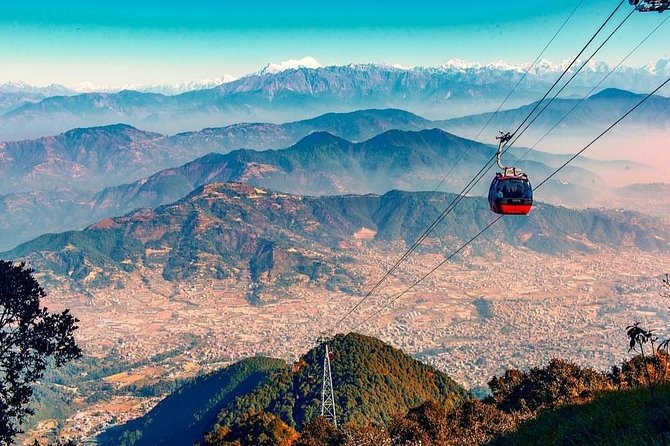
Swambhunath Stupa, popularly known as the Monkey Temple, is an ancient holy site of Kathmandu Valley. It is one of the most respected and famous landmarks, with significant cultural, historical, and religious significance for Buddhists and Hindus. At the same time, Chandragiri Hill is a picturesque hill station southwest of Kathmandu. It is famous for its panoramic views of the Himalayan Range and the Kathmandu Valley. The spectacular scenic vistas offered by Chandragiri Hill are its main draw. Visitors may enjoy a panoramic view of the Kathmandu Valley from the mountaintop, complete with an urban landscape, terraced farms, and ancient monuments. On clear days, the snow-capped Himalayan peaks make a spectacular backdrop, providing a fantastic experience.

Swayambhunath Stupa is one of Nepal's oldest stupas, dating back over 2,000 years. Its history is steeped in legend and mythology. The stupa is thought to have emerged from a primordial lake, and the valley is claimed to have previously been a lotus flower, with Swayambhunath at its center. It is considered a symbol of enlightenment and an important pilgrimage site for Buddhists because it is supposed to house the relics of Kashyapa Buddha. With its famous white dome topped by a gilded spire and draped with colorful prayer flags, the stupa is an architectural masterpiece. The Buddha's eyes painted on all four sides of the stupa signify wisdom and compassion, guarding all beings. Smaller shrines, temples, and statues surround the stupa, adding to the spiritual ambiance of the location.

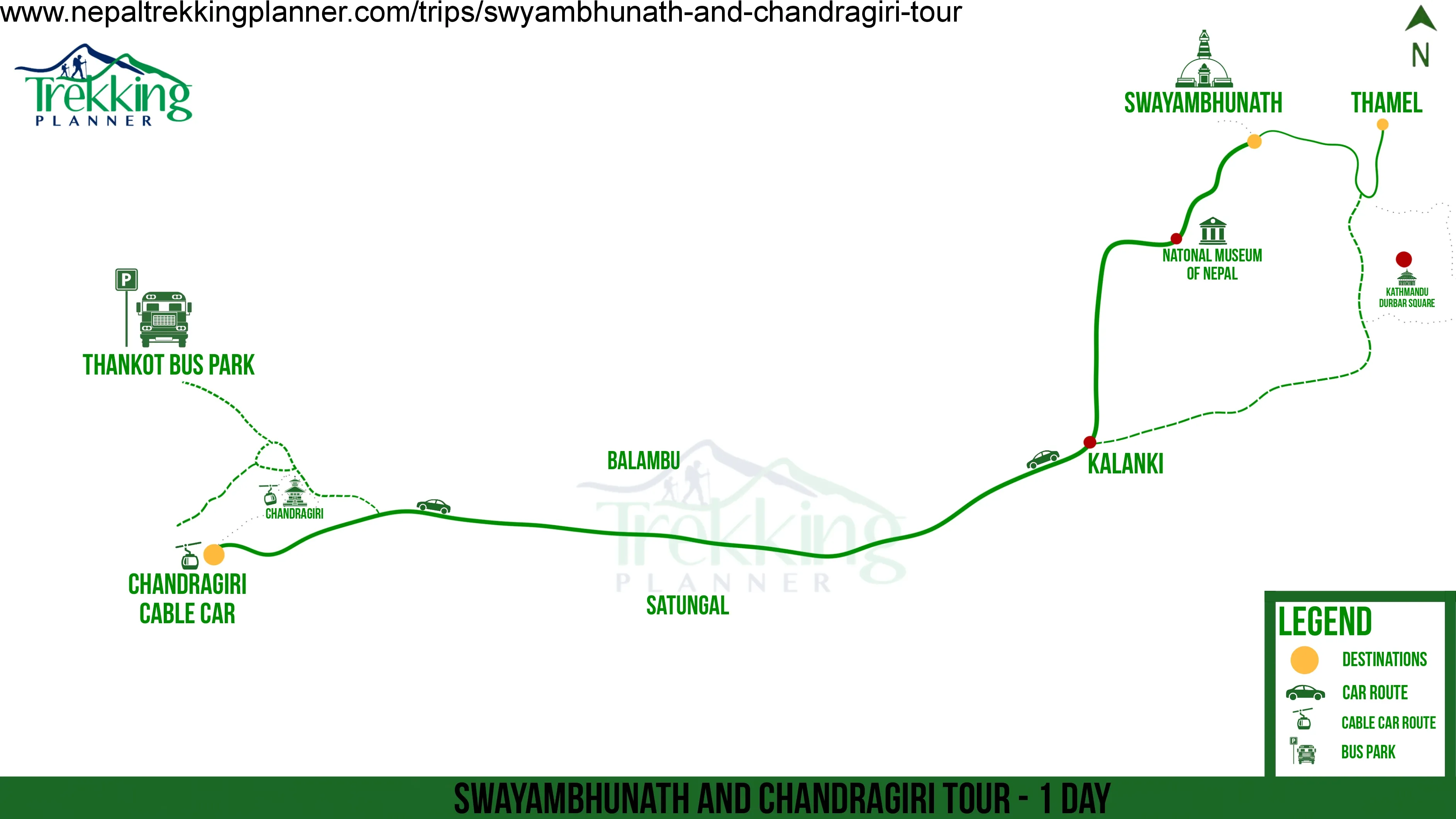
Starting your journey in Kathmandu, where a representative from our firm will greet you in the hotel lobby. After that, we take a car from the hotel to Swayambhunath. We travel to Thankot after exploring and viewing the UNESCO World Heritage Site of Swyambhunath. We take a 2.5-kilometer cable car journey from Thankot to Chandragiri, located at an elevation of 2551 meters. We may visit the temple and get a 360-degree view of the valley and surrounding canyons. After spending some time there and eating lunch according to the client's preferences, we return to Chandragiri and take a ride back to the hotel, where the excursion concludes.

Highlights of Swayambhunath and Chandragiri Day Tour

Swyambhunath, popularly known as the "Monkey Temple," and Chandragiri Hill are both prominent tourist attractions inside the Kathmandu Valley of Nepal. Combining these two destinations within a single tour can provide a unique and engaging experience. Trekking Planner Nepal is here to provide top-class service with these packages.

Highlights of the Swyambhunath and Chandragiri Hill Cable Car Tour.

  • Visiting Swayambhunath, one of the most famous and well-known UNESCO World Heritage Sites in Nepal.
  • Taking a cable car ride towards Chandragiri from Thankot, which is around 2.5 km
  • A chance to witness the majestic mountains from the hill of Chandragiri
  • Witnessing the cultural harmony between the Hindus and the Buddhists.
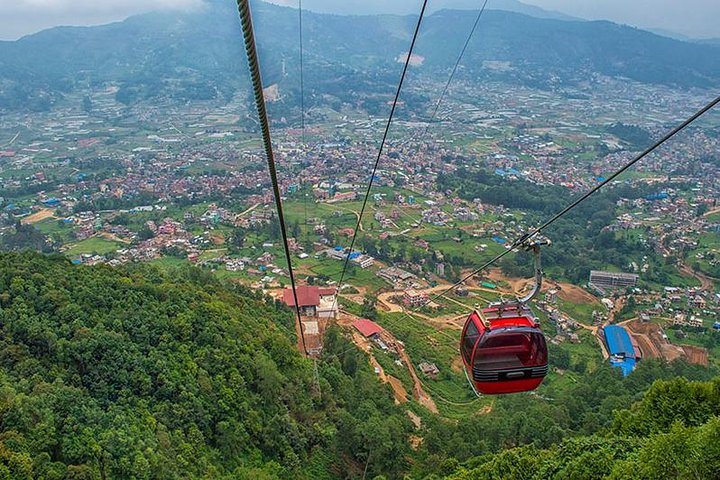
chandragiri-hill

Why to Visit Swayambhunath and Chandragiri?

Swayambhunath (Monkey Temple)

  • Ancient Stupa: Swyambhunath is one of Nepal's oldest and most prominent stupas, dating back over 2,000 years. The Swyambhunath is also the central stupa, is a UNESCO World Heritage Site, and is decorated with colorful prayer flags. The stupa got "Buddha's Eyes" or "Wisdom eyes," representing enlightenment and awareness.
  • Harati Temple: It is a two-story pagoda-style temple gilded in gold. It is located on the northwest side of the Swayambhunath temple. The temple is known as the protector of children.
  • Anantapur Temple: It is located on the southern side of Swayambhunath, which is named after the queen of Pratap Malla, Anantapriya. The temple is dedicated to Goddess Ajima in the form of Parvati.
  • Pratappur Temple: It is a three-story brick temple in the Shikhar style, with intricate carvings. It is located on the northern side of Swayambhunath, which is named after King Pratap Malla. The temple is dedicated to God Bhairav in the form of Lord Shiva.
  • Statue of Dipankar Buddha: The statue lies in the corner behind the small statues of Swayambhunath. It is made of a single stone that dates back to the 7th century.
  • The Vajra: It is a lightning bolt that is placed in front of the Swayambhunath stupa. It is not exactly a lightning bolt, but a depiction that symbolizes hardness, indestructibility, and power.
  • Dewa Dharma Monastery: It is situated on the western side of Swayambhunath, which prioritizes meditation practices.
  • Amideva Buddha Park: The park has three giant golden Buddha statues and a beautiful garden.
  • Word Peace Pond: It lies on the western side of Swayambhunath, where the pond's center features a bronze statue of Siddhartha Gautama. There is a bowl near the statue where visitors can see coins being thrown. It is believed that a wish is granted if the coin falls inside the bowl.
  • Stunning Views: Swyambhunath on a mountaintop provides fantastic panoramic views of Kathmandu Valley and the surrounding mountains. It's a great spot to watch the dawn or sunset.
  • Holy Monkeys: As the temple is home to a vast population of playful monkeys, it is also known as the "Monkey Temple." Visitors can have fun observing these mischievous creatures at work.
  • Art and Architecture: Swyambhunath has an abundance of art and architecture. Exquisite carvings, prayer wheels, and other religious symbols surround the stupa's base.

Chandragiri Hill

  • Cable Car Ride: You can enjoy a scenic cable car ride to the summit of Chandragiri Hill. The ride is around 8-10 minutes and about 2.5 km. The drive provides incredible panoramas of the beautiful green environment and Kathmandu Valley.
  • Bhaleshwar Mahadev Temple: The Bhaleshwar Mahadev Temple, a sacred Hindu pilgrimage site dedicated to Lord Shiva, is at the top of the hill. The temple and its surroundings are calm and tranquil.
  • Adventure Activities: Chandragiri Hill provides options for adventure seekers and magnificent scenery. Hiking, zip-lining, and other outdoor activities are available.

Swayambhunath and Chandragiri Hill simultaneously allow you to experience Nepal's spiritual and natural sides through the cultural harmony between Hindus and Buddhists. It combines cultural exploration and outdoor adventure, providing a remarkable and varied tour experience.
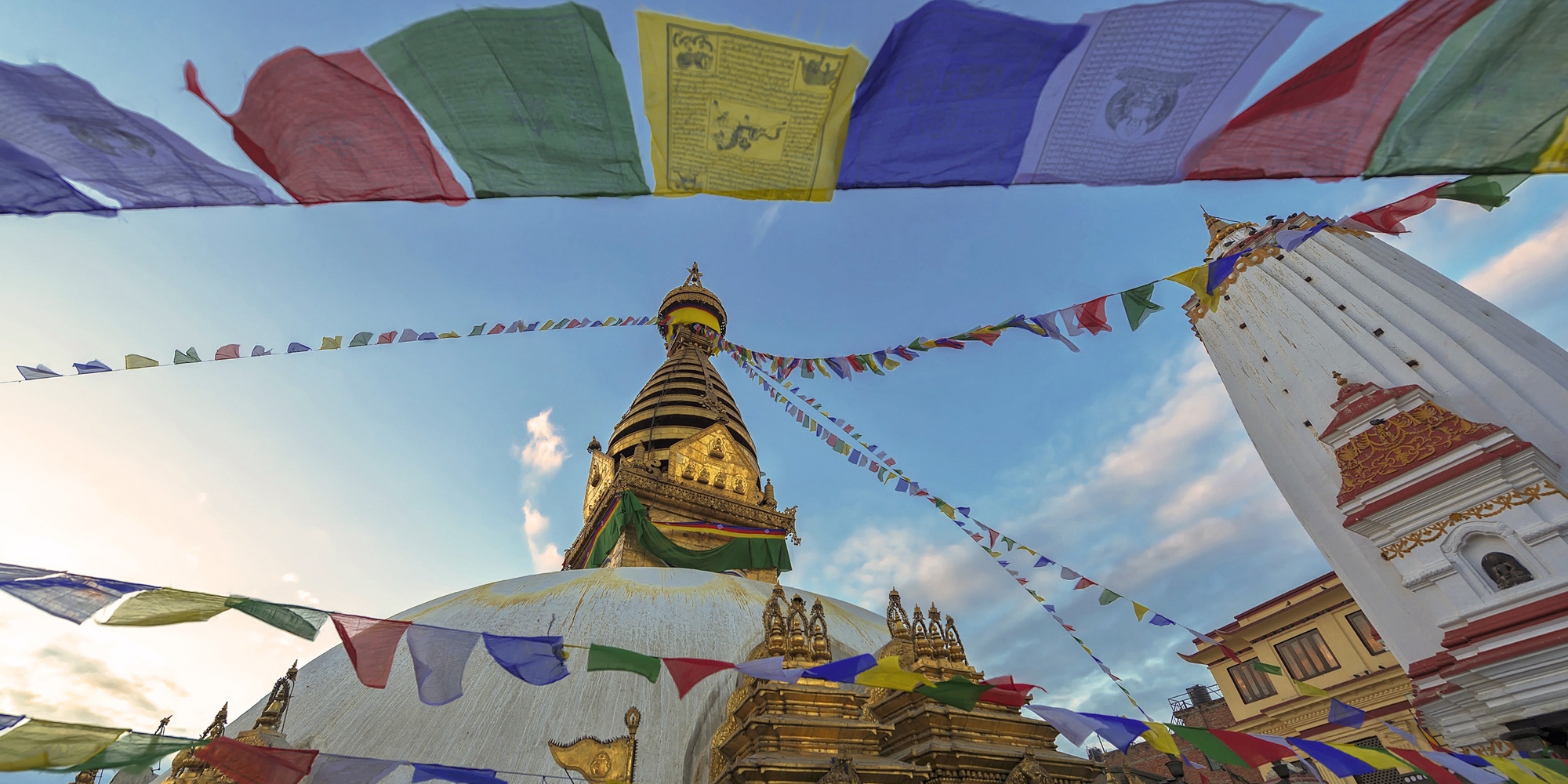
swyambhunath-trekking-planner

What is the Best Time to visit Swyambhunath and Chandragiri?

Usually, you can visit Swayambhunath Stupa and Chandragiri Hill any time of the year. If you plan according to season-wise, the best time to visit, Swayambhunath and Chandragiri are during the autumn (March-May) and spring (September-November) seasons in Nepal.

Usually, the monsoon season (June to August) brings heavy rainfall, which can lead to landslides and obstructed views. The paths may become slippery and dangerous. Still, if you prefer to go during monsoon season, check the weather forecast before heading to your destination.

Talking about the Winter Season (December-February), the weather gets cold and freezes. Still, it is preferable to visit the destination. You might find snow on Chandragiri Hill.

If you prefer to visit Swyambhunath and Chandragiri Hill during the festival, it allows you to experience both Nepal's spiritual and natural sides. It combines cultural exploration and outdoor adventure, providing a remarkable and varied tour experience.  Usually, people visit during Dashain, Tihar, Loshar, Buddha Jayanti, etc.

Remember that festival seasons might also bring more crowds, so plan accordingly if you prefer a more tranquil and relaxed visit. Nonetheless, immersing oneself in the local culture and traditions during these festivals can be a memorable and heartwarming experience.

Is taking a Cable car at Chandragiri Dangerous?

The cable car trips to Chandragiri Hill are usually safe and run safely. In general, the authorities and operators of such tourist destinations in Nepal take visitor safety seriously.
Also, there are significant aspects you need to determine before you begin the trip.

  • Check the Weather: Sometimes, due to poor weather conditions such as heavy rain, high winds, or lightning. Check the weather forecast before heading toward the destination.
  • Weight Limits: Check the weight limits and keep in mind the weight restrictions stated by the cable car operator. Overcrowding the cable car might be dangerous.
  • Hold On: To guarantee stability during the trip, grasp onto the handrails or other marked spots while inside the cable car.
  • Stay Calm: Stay calm during the journey and prevent unexpected movements that could lead to an accident.
  • Take Precautions: If you are prone to motion sickness or have other health problems, take the required precautions or visit a doctor before riding the cable car.

Where Does the Trip Begin and end?

As we begin our day, the trip starts in Kathmandu, where a company representative will receive you in the hotel lobby. We take a car ride from the hotel towards Swayambhunath Stupa. After roaming and observing the UNESCO heritage site of Swyambhunath and spending some time there, we go towards Thankot. From Thankot, we take a 2.5-kilometer cable car ride towards Chandragiri at 2551 meters. We can visit the temple and see the 360-degree view of the valley and the gorges around it. After spending some time there and having lunch according to the client's preferences, we returned from Chandragiri and rode back to the hotel, where the trip would end.
chandragiri-hill-trekking-planner

Why Nepal Trekking Planner for Swyambhunath and Chandragiri Tour?  

"Nepal Trekking Planner" is one of Nepal's prominent trekking and tour companies. There are numerous reasons why Trekking Planner Nepal. Some of the reasons are listed below:

  • Expertise and Local Knowledge: Like other reputed agency organizations, Nepal Trekking Planner will likely have skilled and competent guides familiar with the trekking routes, terrain, and local culture. We can improve your hiking experience by offering information and assuring your safety.
  • Trip Customization: The trekking planner provides various pre-made trekking itineraries that suit multiple interests and fitness levels. We also offer custom tailor-made to your specific interests and needs.
  • Permit and Logistics Assistance: Trekking in Nepal frequently necessitates the acquisition of numerous permissions and logistical planning. Trekking Planner Nepal handles all the essential paperwork and logistics, making your trip less stressful.
  • Safety and Support: Trekking in Nepal can be challenging, and having members from Trekking Planner Nepal with a strong track record can provide reassurance. We can help in an emergency and ensure that safety precautions are taken.
  • Accommodation and Meals: Trekking Planner Nepal organizes lodging in tea houses or lodges along the way and meal arrangements, letting you concentrate on enjoying the walk.
  • Responsible Tourism: Nepal Trekking Planner promotes and supports responsible tourism practices, including eco-friendly trekking, respecting local customs, and supporting local communities.

Swayambhunath and Chandragiri Day Tour - 1 Day Itinerary

Day 1

Swyambhunath Stupa visit with Chandragiri Hill Day Tour

9 AM to 9:30 AM Hotel Pick Up and Drive to Swayambhunath Stupa

After a fulfilling breakfast, a representative from Trekking Planner Nepal will meet you in the hotel lobby and arrange a car to Swayambhunath. Once you meet, the representative will introduce you to your tour guide, who will assist you throughout the tour. Afterwards, hop into your private vehicle and drive towards Swayambhu Stupa. The drive is about 20-30 minutes, depending on traffic and where you are residing. You will drive westward from Kathmandu city to reach the stupa.

9:30 AM to 11:30 AM Sightseeing tour of Swayambhunath Stupa

There are two entry points to the Swayambhu hilltop station. One of which requires you to walk 365 stone steps leading to the top. Once the journey to the hilltop Soyambhunath stupa begins, commence the climb of 365 steps (representing 365 days in a year). Along the stone steps, you can see small stalls selling souvenirs and Buddhist prayer materials.

Once you finish the stone steps, your guide will help you acquire the permit to enter the stupa. Upon reaching Soyambhunath, a UNESCO World Heritage site popularly known as the Monkey Temple, you will explore the stupa grounds while engaging with local Buddhist culture. You can observe the intricate architecture with the panoramic view of Kathmandu city. Similarly, you can get busy with other activities, such as monkey-watching (be sure to take precautions due to their unpredictable behavior) and visiting Shree Gha Chaitya and Harati Devi Temple. Additionally, you can explore art galleries and shops as you descend the hill. Here are the popular attractions of Swayambhunath Temple:

  • Swayambhunath Stupa: It is the main highlight of Swayambhunath. It is a white-domed structure with an all-seeing Buddha's eye and painted eyebrows.
  • Harati Temple: It is a two-story pagoda-style temple gilded in gold. It is located on the northwest side of the Swayambhunath temple. The temple is known as the protector of children.
  • Anantapur Temple: It is located on the southern side of Swayambhunath, which is named after the queen of Pratap Malla, Anantapriya. The temple is dedicated to Goddess Ajima in the form of Parvati.
  • Pratappur Temple: It is a three-story brick temple in the Shikhar style, with intricate carvings. It is located on the northern side of Swayambhunath, which is named after King Pratap Malla. The temple is dedicated to God Bhairav in the form of Lord Shiva.
  • Statue of Dipankar Buddha: The statue lies in the corner behind the small statues of Swayambhunath. It is made of a single stone that dates back to the 7th century.
  • The Vajra: It is a lightning bolt that is placed in front of the Swayambhunath stupa. It is not exactly a lightning bolt, but a depiction that symbolizes hardness, indestructibility, and power.
  • Dewa Dharma Monastery: It is situated on the western side of Swayambhunath, which prioritizes meditation practices.
  • Amideva Buddha Park: The park has three giant golden Buddha statues and a beautiful garden.
  • Word Peace Pond: It lies on the western side of Swayambhunath, where the pond's center features a bronze statue of Siddhartha Gautama. There is a bowl near the statue where visitors can see coins being thrown. It is believed that a wish is granted if the coin falls inside the bowl.

11:30 AM to 12:00 PM Completion of Swayambhu tour, drive to Chandragiri, and Cable car ride

After completing the Swayambhunath exploration, the day tour continues with a bustling drive to Thankot. You can see the transition from the city area to the semi-urban area. The ride is about 12 kilometers, or 30 minutes, depending on traffic. Upon reaching the foothills of Chandragiri, you will take a cable car ticket from Thankot to Chandragiri, located at an elevation of 2,551 meters. The cable car journey takes approximately 10 minutes.

Note: The Chandragiri Cable Car is on hold from 12–1 PM, so be sure to board before then.

12:00 PM to 2:30 PM Chandragiri Temple Exploration and Lunch Break

After reaching Chandragiri hills, you will commence the exploration. Here are the popular activities to do in Chandragiri:

Baleshwar Mahadev Temple: At the top of the Chandragiri hill lies the Baleshwar Mahadev Temple. The temple is dedicated to Lord Shiva, and it is believed that King Prithivi Narayan Shah, who set out to unify Nepal, prayed here before conquering the Kathmandu Valley.

Panoramic Viewpoint: One of the main attractions of Chandragiri is its panoramic viewpoint. The hilltop offers an excellent 360-degree view of the valley. You can witness the Himalayan range, including Everest, Annapurna, Manaslu, Langtang, and Ganesh Himal.

After visiting the temple and witnessing the view, you can take plenty of photographs. You can have a peaceful moment at the hilltop. You can enjoy the scenery and relax to escape the urban noise. Then, you can have lunch at the restaurant, enjoy a cup of tea or coffee, and savor some Nepali or international cuisine. After lunch, prepare to leave Chandragiri.

2:30 PM to 3:00 PM Return to Hotel

After spending some time there, we return to Chandragiri and ride back to the hotel or any specified location. From there, the excursion comes to an end. This one-day trip to Swayambhunath Stupa and Chandragiri Hill, offered by Trekking Planner Nepal, will provide you with an in-depth understanding of Nepal's rich culture, spirituality, and natural beauty. These legendary locations will leave you with fantastic recollections.

Best wishes.

Still Confused?
No worries — team is ready to guide you everystep of the way.

Dates & Availability

Trip Duration
1 Days
Trip Starts & Ends Point
Kathmandu / Kathmandu
Plan your schedule
  • This trip departs every day of the year.
  • This trip is fully customizable. We can customize the trip as per your needs; please contact us.
  • This trip is available on both a fixed departure and a private group basis.
  • If the given date is not appropriate for you, please get in touch with us (call/email now for a private trip: [email protected], mobile +977 98510 71767 (24 hrs) - WhatsApp, WeChat, and Viber) so that Trekking Planner can happily manage your trip on dates favorable for you.
  • Trekking Planner also organizes various trips in small groups that can suit you. We recommend you reserve a seat for yourself by booking with us right away for a beautiful experience. Hurry up! Adventure is waiting for you.

Add-Ons & Options

Mountain Flight in Nepal
US$287 / person

Swayambhunath and Chandragiri Day Tour - 1 Day Cost Details

Trip Includes

  • A highly experienced, helpful, knowledgeable, friendly, English-speaking, well-trained, government-license-holding local tour guide. The price includes his salary, food, drinks, transport, and insurance.
  • All transfers and sightseeing tours by private deluxe car/coach with air conditioning (entrance fees are extra).
  • All applicable government and local taxes per the itinerary.
  • Trekking Planner Nepal’s T-shirt, cap, and city maps.

Trip Excludes

  • Tour entrance fees of the monuments.
  • Nepal visa—USD 25 upon arrival at the airport; bring 2 passport-size photos.
  • All accommodation and meals in Kathmandu.
  • Cable Car Ticket ($22 Per Person) Round Trip
  • Swyambhunath Stupa Entrance (NRS. 200 Per Person)
  • Travel insurance.
  • Cost not mentioned in the above list.

Interactive Map

StartMid DaysEnd

Infographic Map

Download

Essential Information

Suggested Equipment List

  • Day pack
  • Trekking/hiking shoes
  • Sun Hat/cap
  • Waterproof Gore-Tex layer
  • Raincoat
  • good quality socks
  • trekking/hiking trousers
  • trekking/hiking shirts
  • Sunglasses
  • Water bottle
  • Camera and batteries

Swayambhunath and Chandragiri Day Tour - 1 Day Equipments

Day Tour in Nepal mainly incorporates visits to some of the most prestigious, religious and spiritual landmarks of Nepal. The tour involves walking on uneven streets, cultural sites, and temples which can be in variable weather. So, it is necessary to pack light and wear respectful attire that is comfortable and according to the weather condition. However, it is important to understand that as tourists visit religious areas, they must wear clothes covering shoulders and knees.

Besides that, tourists must bring other essential items required during the tour. But there is always a sort of confusion among members regarding what to pack. So, here is a carefully crafted Nepal Tour packing list that sums up everything you will need for the experience. From general items, cloth layers, headgear, footwear, to accessories and first aid, the list consists of light and smart packing items for every challenging hiking trail.

Key Packing Advice from Trekking Planner Nepal

  • Aim for 5-6 kg maximum in your day bag for a comfortable walking experience especially on steep and long trails.
  • Prioritize light weight, multipurpose and quick drying clothing items.
  • No short clothes inside monasteries or religious places. Shoulders and knees must be covered.
  • Always check the weather forecast for adjusting your layered clothes accordingly.
  • Any religious items for puja or offerings like incense sticks, flowers, fruits, prayer beads and others can be purchased around the temple premises.
  • The company provides T-shirts, and caps if necessary so prepare accordingly.
  • During a multi-day tour, your guide is going to carry a first aid kit, but feel free to bring your personal medicines if necessary.

Note: You do not need to bring all the items mentioned below to Nepal. There are several shops in Kathmandu or Pokhara where you can buy or rent high-quality gear at a reasonable price. So, feel free to pack light and purchase or rent any missing items after your arrival in Nepal. Also, members from Trekking Planner Nepal Pvt. Ltd. can also guide and assist you to find the best deals in gear and equipment in Thamel, Kathmandu.

General
  • Comfortable day pack 
  • Umbrella or Raincoat
  • Reusable water bottle
  • Light rain jacket (according to the weather forecast)
  • Hand sanitizer, wetwipes, and toilet paper
  • Energy Snacks
  • Reusable shopping bag
Upper Body Layers

  • Breathable long sleeve T-shirt
  • Modest top that covers shoulders
  • Lightweight windbreaker (if necessary)
  • Lightweight scarf or shawl
Lower Body Layers

  • Lightweight long pants or kurtha
  • Undergarments
  • Light socks
Footwear & Accessories

  • Closed toe walking shoes
  • Small day pack lock
Head & Sun Protection

  • Wide-brim hat or cap
  • Sunglasses with UV protection
  • Sunscreen (SPF 30+)
  • Lip Balm
Personal & Medical Kits

  • Band aids
  • Antiseptic
  • Pain relievers
  • Personal medications
  • Insect repellent (optional)
  • Motion sickness tablets (optional)
Travel Documents

  • Valid passport or ID
  • Entry permits
  • Nepalese Rupees in small denominations
Miscellaneous

  • Phone, camera, and charger
  • Power Bank for backup
  • Small notebook (optional)
  • Religious items can be purchased around the temple/monastery premises

What Makes Trekking Planner Different?

Where do I want to go? When is the best time to travel to my desired destination? How much will it cost to travel to and stay at my destination? What activities can I do while I'm there? What type of accommodations should I book? Do I need a visa or any vaccinations to travel to my destination? How will I get around once I'm there? What should I pack for my trip? How can I stay safe while traveling? How can I make the most of my trip and have a memorable experience? These are some questions that may arise in your mind before you intend to travel.
Talk to an Expert
Dipak Lamichhane
Travel Consultant
Dipak Lamichhane
+977 9851071767
Need Help? Call Us+977 9851071767