Book Now
Price from
US$699

Annapurna Base Camp Short Trekking - 8 Days

1112 reviews in TripAdvisor
238 reviews in Google
19 reviews in TrustPilot

The 8-Day Annapurna Base Camp Short Trekking is one of the classic trekking destinations in Nepal, offering breathtaking views of the Annapurna Mountain Range. With a total duration of 8 days, the trek starts with a drive to Ghandruk, then passes through villages such as Chomrong, Dovan, MBC, Bamboo, and Jhinu. Also, the trek allows you to walk inside the Annapurna Conservation Area and experience rich Gurung and Magar hospitality.

Annapurna short trekking itself is moderately difficult. Trekkers can do it with a good level of physical fitness with very little chance of altitude sickness. The trek is best for couples, families, corporate workers, adventure seekers, photographers, and beginner trekkers. Additionally, the best seasons to visit Annapurna Base Camp are spring and autumn. The ABC short trek package cost with Trekking Planner Nepal Pvt. Ltd includes transportation, permit, guide & porter fees, accommodation, and food during the trek. Starting at just USD 799 or less, depending on the group size, Book Annapurna Base Camp Short Trekking 8 Days for a trip of your lifetime.

Trip Facts
Duration
8 Days
Difficulty Level
Moderate
Maximum Altitude
4135m
Starts
Pokhara
Ends
Pokhara
Region
Annapurna
Group Size
2+
Activities
Trekking
Season
March-June and Sept-Dec

Highlights of Annapurna Base Camp Short Trekking

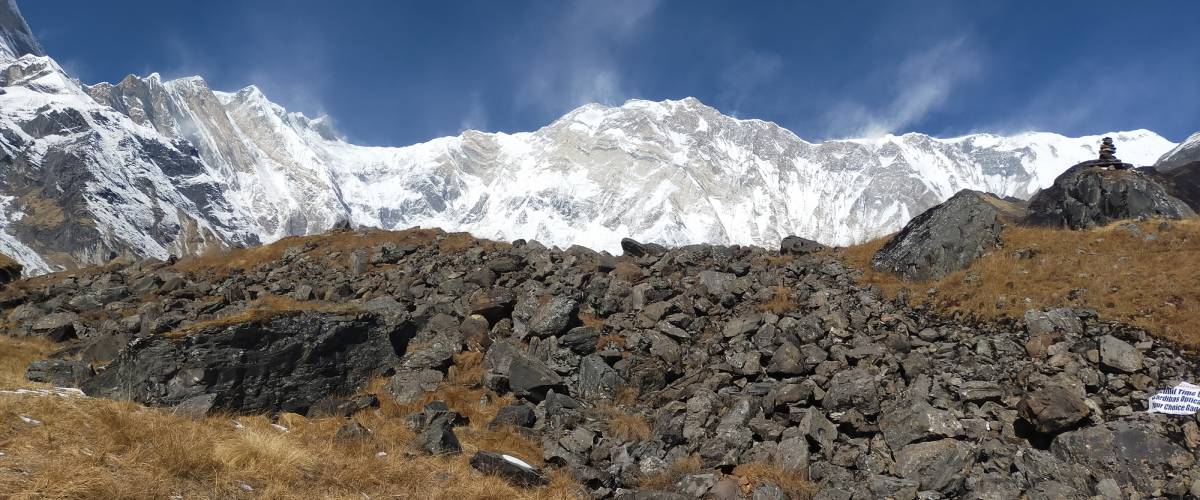
  • Stand at the foot of Mount Annapurna, the 10th-highest mountain in the world, popularly known as Annapurna Base Camp (4,130 m).
  • Get the opportunity to stand at Machhapuchre Base Camp (MBC) before continuing to ABC, enjoying two iconic base camp visits in a single trek.
  • Witness the panoramic view of Annapurna I, Annapurna IV, Machhapuchre, Gangapurna, Annapurna II, Hiunchuli, Himalchuli, Tent Peak, and others.
  • Experience Gurung and Magar hospitality and cultural encounters as you walk past traditional villages such as Ghandruk and Chomrong.
  • Walk through varied landscapes, starting in rhododendron forests and traditional stone houses, then transitioning to river gorges, suspension bridges, and ultimately alpine meadows.
  • Trek into the renowned Annapurna Conservation Area, one of Nepal’s largest protected areas, home to rare animals such as the Snow Leopard and the Red Panda.
  • Enjoy side trips to the Old Gurung Museum in Ghandruk and a rejuvenating bath at the hot springs in Jhinu Danda.

Introduction: Annapurna Base Camp Short Trekking 

The Annapurna region, situated in the north-central part of Nepal, is home to one of the classic trekking routes: the Annapurna Base Camp trek. Annapurna Base Camp (4,130 m/13,550 ft.) is the foot of the 10th highest mountain in the world - Mt. Annapurna. Reaching the Annapurna Base Camp is a dream come true for many trekkers, making it one of the most popular destinations for adventure seekers worldwide.

Also, trekkers can walk through the Annapurna Conservation Area, which is home to some of the most exotic flora and fauna. The conservation area is home to wildlife such as Himalayan Tahr, Musk Deer, Himalayan Monal (Nepal's national bird), Blue sheep, and others. Additionally, if trekkers are lucky enough, sightings of rare animals like the snow leopard and Red panda are also possible, making the trek exciting with wildlife encounters and photography.

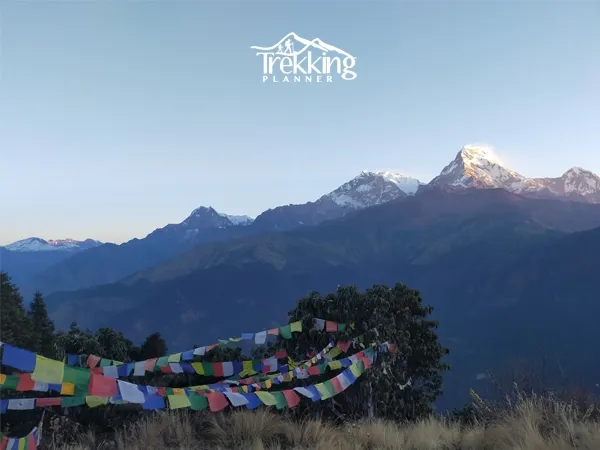
Besides that, one reason to trek the short ABC is the mountain views. With views of the world's 10th-highest mountain, Annapurna, the trek offers panoramic views of other popular peaks, especially in the Annapurna Mountain Range. Mountains, including Annapurna II, III, IV, Himalchuli, Hiunchuli, Gangapurna, Machhapuchre, Tilicho Lake, and Lamjung Himal, are seen throughout the route.

The Annapurna Base Camp Short Trekking route passes through settlements like Ghandruk, Chomrong, Dovan, Machhapuchre Base Camp, Bamboo, and Jhinu. These settlements are known for their rich hospitality and cultural encounters. The trekking trail is filled with prayer flags, prayer wheels, chortens, Buddhist monasteries, and mani walls that give an introduction to the deep-rooted Tibetan culture. The Old Gurung Museum in Ghandruk adds a layer of authentic immersion in Gurung and Magar lifestyles. Food, dances, music, and communication add a memorable experience. Also, hot springs in Jhinu village provide a unique way to rejuvenate the body after a long, tiring walk.

With easy navigation and a subtle introduction to the Himalayan routes of Nepal, the Annapurna Base Camp Short Trekking 8 Days can be done throughout the year. It is suitable for beginner trekkers, adventure seekers, families, couples, and corporate workers. The eight-day duration allows private, small or large groups to witness the Himalayas in a short duration, making it accessible to many people. The best time to visit is Spring and Autumn. Still, trekkers are required to obtain permits such as the Annapurna Conservation Area Permit.

annapurna-short-trek

Major Attractions: Annapurna Base Camp Trek Nepal

1. Mountain Views

One of the most significant attractions of the Annapurna Base Camp Trek is the unparalleled mountain views. The breathtaking views of the Annapurna Massif accompany trekkers throughout the trek.  Trekkers can enjoy panoramic views of several snow-capped peaks such as Annapurna I (8,091 m/26,545 ft), Annapurna South (7,219 m/23,920 ft), Machhapuchhre himal (Mt Fishtail) (6,993 m/22,942 ft), Hiunchuli (6,441 m/21,131 ft), Gangapurna (7,455 m/24,458 ft), Annapurna III (7,555 m/24,786 ft), etc. Watching these snow-capped peaks at sunrise or sunset provides an even more mesmerizing sight.

2. Annapurna Conservation Area

The Annapurna Conservation Area is one of the most remarkable attractions during the Annapurna Base Camp Trek. It is Nepal's first and largest protected region by area, established in 1986. This extraordinary region is home to numerous natural resources and landscapes, including lush green forests, glacial rivers, alpine meadows, deep gorges, and snow-capped peaks. Similarly, it is also home to 105 mammals (including snow leopards), 523 birds, and over 1,200 plant species. Some popular species include Himalayan Tahr, Musk Deer, Himalayan Monal, langurs, and snow leopards.

3. Ghandruk

Ghandruk is one of the most renowned, scenic, and culturally rich settlements along the Annapurna Base Camp Trek route. Situated at an altitude of 1,940 m/6,364 ft, this village serves as a gateway to the Annapurna region. The village is renowned for its traditional stone houses, terraced farmland, narrow & stone cobbled streets, and the warm hospitality of the Gurung community, who are the natives of this region. Trekkers can also explore the Gurung museum, interact with residents, and enjoy traditional cuisine, customs, costumes, and Gurung folk dance.

4. Annapurna Base Camp

Situated at an altitude of 4,130 m/13,550 ft, the Annapurna Base Camp (ABC) is the ultimate destination of the Annapurna Base Camp Trek. Reaching the base camp rewards viewers with a 360-degree panoramic view of surrounding snow-capped peaks, including Annapurna I, Annapurna South, Hiunchuli, Machhapuchhre (Mt Fishtail), Gangapurna, and several others. The Annapurna Base Camp is also a mentally rewarding destination, as trekkers walk for several days along challenging trails in the Annapurna region to finally reach the base camp. 

5. Machhapuchre Base Camp

Situated at an altitude of 3,700 m/12,139 ft, the Machhapuchhre Base Camp is one of the most memorable destinations along the Annapurna Base Camp Trek route. The Base Camp is named after the iconic Machhapuchhre himal (Mt Fishtail) and offers breathtaking close-up views of the peak shaped as a fish tail. However, climbing Machhapuchhre is prohibited in Nepal due to its sacred identity. It also serves as the final overnight stop before the trek's ultimate destination, i.e., the Annapurna Base Camp.

6. Hot Spring

The natural hot spring located near Jhinu Danda is one of the most soothing experiences of the entire trek. The hot spring offers trekkers a well-deserved rest after several days of hiking through the Annapurna region. The hot spring can be reached through a short downhill walk from the Jhinu Danda settlement. The hot springs are naturally heated and rich in minerals. They are believed to help relax tight, tired muscles, improve blood flow, and calm the body and mind after physical exertion. 

7. Pokhara

Pokhara is the major gateway to the Annapurna region and one of Nepal's most premier tourist destinations. It is situated about 200 kilometers west of Kathmandu. It is renowned for its vibrant nightlife, scenic lakes such as Phewa, Begnas, and Rupa, and popular attractions such as Davis Falls, Gupteshwor Cave, World Peace Pagoda, and the International Mountain Museum. Pokhara also offers magnificent views of several snow-capped mountains, including Machhapuchhre (Fishtail), Annapurna South, and several others. Pokhara serves as the perfect starting and ending point for the Annapurna Base Camp Trek.

Why Choose the 8-Day Annapurna Base Camp Trek Packages?

ABC is one of the most popular and spectacular treks in Nepal, offering stunning vistas of the Annapurna Range and other landscapes. The present Annapurna Base Camp Trek packages is a popular choice for those with limited time who still want to see the beauty of the Annapurna Region. Here are a few reasons why an 8-day walk would be an ideal idea:

  • Well-defined Trail: The Annapurna Base Camp Trek follows a proper trail that is generally easy to navigate. The track is well-marked and provides clear directions, making it ideal for people to explore the trail.
  • Affordable: The Annapurna Base Camp short trek is widely regarded as one of the most affordable treks in Nepal. The cost of the trek varies depending on the level of service and accommodations chosen. Still, an 8-day route is often less expensive than longer treks. Besides, Trekking Planner Nepal provides an itinerary as per your budget and requirements.
  • Moderate Altitude: The Annapurna Base Camp trek's highest point is 4,130 meters (13,550 ft.) at Annapurna Base Camp. The trek does not include any high passes, and there is also a lower risk of altitude sickness.
  • Beautiful Views: The Annapurna Base Camp trek is famous for the stunning panorama of the Annapurna Range, including some of the world's highest peaks. The route takes you through beautiful woodlands, terraced farms, and medieval villages, offering a variety of vistas and sights.
  • Cultural Experience: The trek passes through several traditional Gurung and Magar villages, offering a unique opportunity to learn about local culture and way of life. You have the opportunity to connect with locals and learn about their customs, traditions, and daily lives.
  • Hot Springs: The trek includes a visit to natural hot springs in Jhinu Danda, where you can relax and soothe aching muscles after a long day of hiking. The hot spring is a famous spot to relax and enjoy the natural spring.
  • Wildlife Spotting: The Annapurna Region is home to a diverse wildlife, including snow leopards, Himalayan black bears, and langurs. You may encounter some of these animals along the trip, especially during the Annapurna Conservation Area trek.

How does the 8-day Short Annapurna Base Camp Trek start and end?

Your guided short annapurna base camp trek begins with a drive from the lakeside city of Pokhara to Ghandruk. The drive takes you towards the forest section and hilly patches of Nepal. Most of the roads are black-topped, but from Birethanti up, it's off-road. The bumpy section can cause motion sickness to some individuals, so it's better to prepare accordingly. The drive lasts for 3 hours to reach the Gurung village of Ghandruk.

Ghandruk is a traditional mountain village in the Annapurna region that is known for its rich Gurung culture. Ghandruk also provides panoramic views of the Himalayas, including Annapurna South and Gangapurna. There is also an old Gurung Museum for exploration. From Ghandruk, the Annapurna Base Camp short trek itinerary extends towards Chomrong.

Chomrong is another scenic mountain village that serves as the primary gateway to Annapurna Base Camp in Nepal. The village lies inside the Annapurna Conservation Area and offers views of Annapurna South, Hiunchuli, and Fishtail. Then, from Chomrong, the trek continues towards Dovan, another settlement in the area.

Dovan is another popular rest stop on the Annapurna Base Camp short trek. The village sits beside the Modi Khola river and provides views of Annapurna and Machhapuchre. The village is also a good rest stop for birdwatchers, as it attracts a variety of Himalayan birds. Furthermore, Dovan village has a bakery that may interest you.

From Dovan, the journey continues to Machhapuchre Base Camp, at the foot of the fishtail mountain, and then to Annapurna Base Camp. Reaching the ABC is the ultimate highlight of the total trek.  Annapurna I, Annapurna South, Hiunchuli, and Machhapuchre, bless you with all their glory. The panoramic view with sunrise will feel surreal. With quality time and enough photographs, you will begin the return journey.

The return journey begins with a walk to Bamboo. From Bamboo, you will head to Jhinu village, which is known for its hot springs. For a small price, you can rejuvenate your body at the natural hot springs (much needed). As your overnight stay in Jhinu ends, you will return to Pokhara by jeep. After reaching Pokhara, your Annapurna Base Camp Short Trekking 8 Days with Trekking Planner Nepal Pvt. Ltd. officially ends.

Annapurna Base Camp Trek Difficulty Level

The Annapurna Base Camp Trek is considered moderately difficult. It is a perfect trek for both experienced and novice trekkers. However, a basic level of physical fitness along with mental determination is required to complete the Annapurna Base Camp Trek successfully. The trek involves walking for multiple hours a day for several days through varied terrains and trails with steep ascents and descents. Here are some things to consider:

1. High altitude

High altitude is one of the key factors that make the ABC trek moderately difficult. The trek involves ascending from lower valleys into high-altitude terrain and eventually reaching the Annapurna Base Camp at 4,130 m/13,550 ft. At these high altitudes, the atmosphere contains significantly less oxygen than at lower altitudes or at sea level. Hence, trekkers can feel physically exhausted relatively quickly. In some cases, signs of Altitude sickness or Acute Mountain Sickness (AMS) can be present. The signs include nausea, headache, fatigue, and shortness of breath.

2. Distance and Duration

The classic Annapurna Base Camp Trek requires several days of continuous walking through challenging trails. Trekkers have to walk 5 to 8 hours, covering approximately 8 to 14 km per day for several days. Hence, trekkers need to have at least a baseline level of fitness and patience to complete the trek.

3. Rugged Terrains

The Annapurna Base Camp Trek passes through diverse types of terrain. The trekking trails pass through stone pavements, staircases, rocky terrains, forest trails, and uneven tracks. Steep uphill ascents and downhill descents add to this challenge. These varied types of rugged terrains can make the trek more physically demanding. Hence, proper trekking footwear, along with a steady walking pace, becomes essential.

4. Weather and Temperature Variations

Weather and Temperature variations are another major factor that contributes to the difficulty of the ABC trek. Since the Annapurna Base Camp Trek traverses high-altitude terrain, the weather can change quickly throughout the trek. The lower sections, including Birethanti, Ghandruk, Jhinu Danda, and Chhomrong, can have average daytime temperatures of 15 to 25℃ (59 to 77℉) but are prone to frequent rainfall during the monsoon. Also, higher sections like MBC and ABC can be cold, with average temperatures ranging from 5 to 15℃ (41 to 59℉).

Annapurna Base Camp Short Trekking - 8 Days Itinerary

Besides our program with standard Itineraries presented on websites, we also run and organize private or tailor-made itineraries to suit every interested individual, couple, or for honeymoon, families, school/college groups, to corporate executives at local mountain Lodge-Hotels and Resorts, or with camping facilitie,s includes different unit of kitchen-cook-staff and guides as well porters.

 For tailor-made programs and itineraries tailored to your duration and preferred destination, please contact us (Mobile: +977 98510 71767 [24 hrs] - WhatsApp and Viber) and we will provide you with all necessary details and full information regarding your holiday plan in the Himalayas.  

Day 1

Drive to Ghandruk village, 1,930m/6,332 ft (3 hours), explore the town, take the day easy for acclimatization; Driving distance 57.1 km/36 miles

Max Altitude: 1,930m (6,332ft)
Duration: 3hours
Distance: 57.1km
Meals: Lunch + Dinner, Tea/Coffee
Accommodation: Gurung Cottage/Hotel Samipya Ghandruk

After a pleasant overnight stop at Pokhara facing views of the Annapurna Himalaya range of mountains with Machhapuchare peaks 'Fish Tail', have a hearty breakfast in the hotel then drive beyond Pokhara to commence our first day walks.

Journey with grand views of Annapurna heading past farm villages and towns and then reaching Bhirethati, one of the most charming villages around Annapurna.

From here, the walk starts following Modi River for a short walk around low and warmer farm areas and then on stone steps uphill to reach Gurung village Ghandruk.

At Ghandruk overnight in a nice comfortable lodge with a view of Annapurna peaks with time to visit this nice Gurung village, which is also a gateway to many trekking and adventure around Annapurna areas.

Day 2

Trek to Chomrong 2,170m/7120ft - 06 hrs, walking distance: 9km / 5.5miles

Max Altitude: 2,170m (7,119ft)
Duration: 6hours
Distance: 9.5km
Meals: Breakfast + Lunch + Dinner, Tea/Coffee
Accommodation: Panorama Lodge

From Ghandruk morning walk up at the village top and then on gradual path for short-while soon our route picks to a climb to reach at Kimrong Danda (ridge) with some Tea-House and Lodge. Here with short break downhill into cool forested trails to reach the valley floor of Kimrong River with its nice farm village located in this peaceful valley, from here climbs starts for an hour or more to reach a hill top.

After the climb on gradual winding path paved with fine stone work to reach above Chomrong village and then a short descend to reach our overnight place within nice and large village of Chomrong. A large Gurung village similar to Ghandruk which is the last permanent human settlement on route to Annapurna base camp within sanctuary.

Day 3

Trek to Dovan 2,630 m/8629ft -06 hrs. walking distance; 11.2km/ 7 miles.

Max Altitude: 2,630m (8,628ft)
Duration: 6hours
Distance: 11.2km
Meals: Breakfast + Lunch + Dinner, Tea/Coffee
Accommodation: Dovan Guest House

After Chomrong on downhill to cross a bridge over Chomrong river with uphill to Sinuwa danda (ridge) with couple of Tea-House and shops, where walk leads into deep forested areas on winding ups and then descend into dense woodland with bamboo grooves to a place called also as Bamboo.

A small settlement to cater the needs of the trekkers with many good lodges located in a river gorge surrounded by forest of rhododendron-pines and bamboo.

From the Bamboo place walk is gradual into woods with easy ups to reach at Dovan for overnight stops in a small remote and isolated place with few lodges for travelers.

Day 4

Trek To Machhapuchare Base Camp 3,700 m/12139ft - 06 hrs; walking distance: 13km/ 8.1 miles

Max Altitude: 3,700m (12,139ft)
Duration: 6hours
Distance: 13km
Meals: Breakfast + Lunch + Dinner, Tea/Coffee
Accommodation: Fishtail Lodge

Slowly our adventure leads closer to our aim and highlight as walk leads into winding ups into forest past a lonely place called Himalaya Hotel, located next to large overhanging cave Hinko which is directly beneath Annapurna South and Huin-Chuli peaks.

From Himalaya Hotel downhill near Modi River then with short climb to reach at Deurali where tall tree lines stops for short alpine bushes, walk carries on uphill following Modi river right up to our overnight stop at Machhapuchare base camp located at the bottom of majestic North Face of Machhapuchare Himal ‘Fish Tail’.

Day 5

Trek to Annapurna Base Camp (ABC) at 4,130 m/13550ft - 03 hrs.: walking distance; 2.9km/ 1.8 miles

Max Altitude: 4,130m (13,549ft)
Duration: 3hours
Distance: 2.9km
Meals: Breakfast + Lunch + Dinner, Tea/Coffee
Accommodation: Snowland Lodge And Restaurant

An easy and short day morning walk to Annapurna base camp, from Machhapuchare where Annapurna Sanctuary starts right up base camp, walk leads to short ups to reach a level ground on a huge field or a plateau within the Sanctuary enclosed by an array of peak and soon walk leads to a welcome sign-post of Annapurna Base Camp.

Reach our final destination and highest spot at above 4,130 m high situated beneath towering Mt. Annapurna and the range of other peaks of Vara-Shikar, Gangapurna with Annapurna South.

Annapurna Base Camp is the only base camp in the whole Himalaya region with the facility of a nice and cozy lodge including a nice food menu and rooms facing amazing views of Annapurna peaks.

Day 6

Trek from Base Camp to Bamboo 2,345m/7710ft - 06 hrs.: walking distance: 15km/ 9.9 miles

Max Altitude: 2,345m (7,693ft)
Duration: 6hours
Distance: 15km
Meals: Breakfast + Lunch + Dinner, Tea/Coffee
Accommodation: Eco Friendly Lodge

Enjoying lovely and pleasant scenic times at Annapurna base camp a long walk of nearly six hours leads you downhill with short ups to reach Bamboo and back into tall tree lines and lush vegetation, after being on arctic zone climate at Annapurna base camp and sanctuary.

Day 7

Trek to Jhinu Village 1,780m/5840ft with Hot Spring - 06 Hrs; walking distance: 11.7km/ 7.3 miles.

Max Altitude: 1,780m (5,839ft)
Duration: 6hours
Distance: 11.7km
Meals: Breakfast + Lunch + Dinner, Tea/Coffee
Accommodation: Hot Spring Cottage

Return journey back to Chomrong with ups and downhill trail, from Chomrong hill top our route diverts to another fresh new trail to reach at nice hill village at Jhinu located on a ridge with grand scenery of rolling hills and mountains.

Jhinu provides refreshing natural hot-spring for interested people which is a mere distance downhill of half hour to the hot spring with two nice warm pools close to raging Modi-River.

Day 8

Board the jeep and drive from Jhinu village towards Pokhara. (3 hours), Total Diststanec about 53 Km/33 miles

Max Altitude: 822m (2,696ft)
Duration: 3hours
Distance: 55km
Meals: Breakfast + Lunch Tea/Coffee

Our last day of trekking, where morning leads to a nice pleasant walks downhill within low and warmer farm and paddy fields areas, where interesting drive takes you at scenic and beautiful Pokhara for overnight stops by famous serene Lake Phewa.

Still Confused?
No worries — team is ready to guide you everystep of the way.

Dates & Availability

Trip Duration
8 Days
Trip Starts & Ends Point
Pokhara / Pokhara
Plan your schedule
Select Departure Dates
Aug 2026
Sep 2026
Oct 2026
Nov 2026
Dec 2026
Jan 2027
Feb 2027
Mar 2027
Apr 2027
May 2027
Start Date
26 Aug, 2026
End Date
02 Sep, 2026
Guaranteed
Price
US$699US$799
  • Annapurna Base Camp Short trek departs every day of the year.
  • This trip is fully customizable. We can customize the trip as per your need, please contact us.
  • This trip is available on a Fixed Departure and a Private Group Basis.
  • We also provide only guide and porter service 
  • This trip can be booked privately if you travel solo, group, or with family.
  • Have a big group? We can help as per your needs.
  • We can help you make it fit your budget.
  • We accept instant booking and online payment.
  • If the given date is not appropriate for you, please get in touch with US (Call/email now for a private trip, [email protected], Mobile +977 98510 71767 (24 hrs) - WhatsApp, WeChat, and Viber)so that Trekking Planner can happily manage your trip on dates favorable for you.
  • Trekking Planner also organizes various trips in small groups that can suit you. We recommend you reserve a seat by booking with us immediately for a beautiful experience. Hurry up! Adventure is waiting for you.

Add-Ons & Options

Kathmandu to Pokhara flight ticket
US$127 / person
Pokhara to Kathmandu flight ticket
US$127 / person
Kathmandu to Pokhara deluxe tourist bus
US$15 / person
Pokhara to Kathmandu deluxe tourist bus
US$15 / person

Annapurna Base Camp Short Trekking - 8 Days Cost Details

Trip Includes

Starting price: US$699 per person.

  • National Park entrance fee and Trekkers’ Information Management System( TIMS card).
  • A high experience, helpful, knowledgeable, friendly, English-speaking, well-trained, Government license holding guide. Price includes his salary, food, drinks, accommodation, transport, and insurance.
  • Two guests to one porter with their insurance, salary, food, accommodation, and equipment.
  • We provide an assistant to guide his salary, food, drinks, accommodation, transport, and insurance walking with the group to support where necessary as per the group size.
  • Best available lodge accommodation in the mountain during the trekking.
  • Three meals a day; breakfast, lunch, and dinner and tea/coffee during the trekking. (you can choose food as you want from lodge menu)
  • Safe drinking water.
  • Pokhara to Nayapul/Ghandruk and Jhinudanda to Pokhara by private vehicle.
  • First aid kit box.
  • Trekking Planner’s T-shirt, cap, duffle bags, city and trekking route maps – if necessary.
  • Arrangement of emergency evacuation service (should have insurance for emergency evacuation and will be paid by your travel insurance company)
  • Oximeter to check your pulse and oxygen saturation and heart rate twice daily during the trek (very useful to check Altitude Mountain Sickness (AMS) symptoms). This helps ensure your trek is in the safest hands possible.
  • All applicable government and local taxes per the itinerary.

Trip Excludes

  • Your Nepal Visa fees 
  • All the International airfare to and from Kathmandu 
  • All meals and accommodation in Kathmandu and Pokhara.
  • Kathmandu to Pokhara to Kathmandu transportation.
  • Personal travel and health insurance as well as insurance for helicopter evacuation.
  • In case of extra nights’ accommodation, lunch, and dinner in the city due to early arrival and late departure as well as early back/return from mountain/trekking (due to any reason) than the given period of the itinerary. We can help you arrange an extra night's accommodation.
  • Your expenses such as (laundry, baggage charge, phone calls, battery recharge, bar and beverage bill, boiled or bottled water, hot and cold shower, extra porter.. etc).
  • The tips to the trekking crews and drive.
  • Extra expenses due to flight delays, strikes, weather conditions, or any event out of our control.

Interactive Map

StartMid DaysEnd

Infographic Map

Download

Essential Information

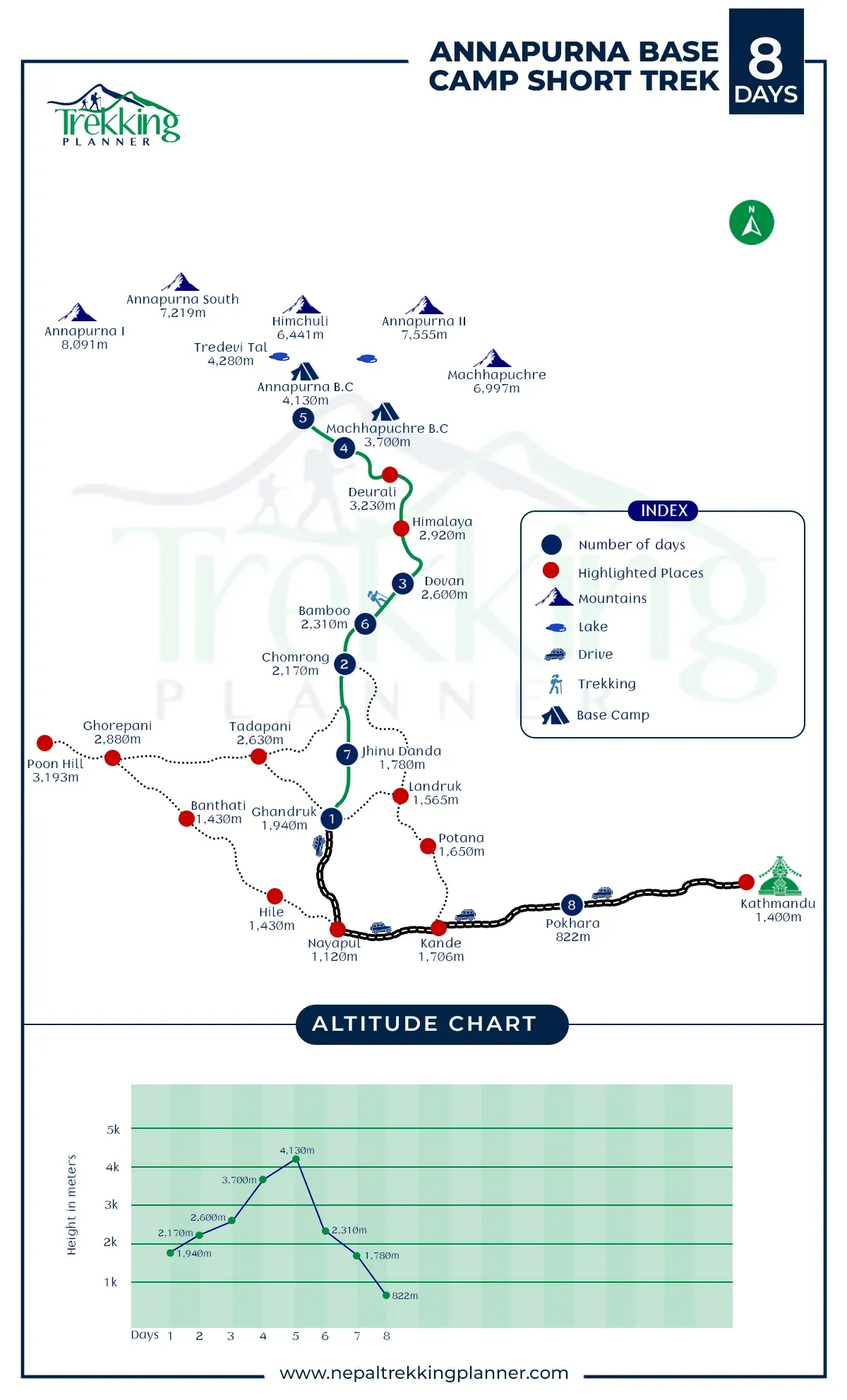
Annapurna Base Camp Altitude Coverage & Trek Distance 
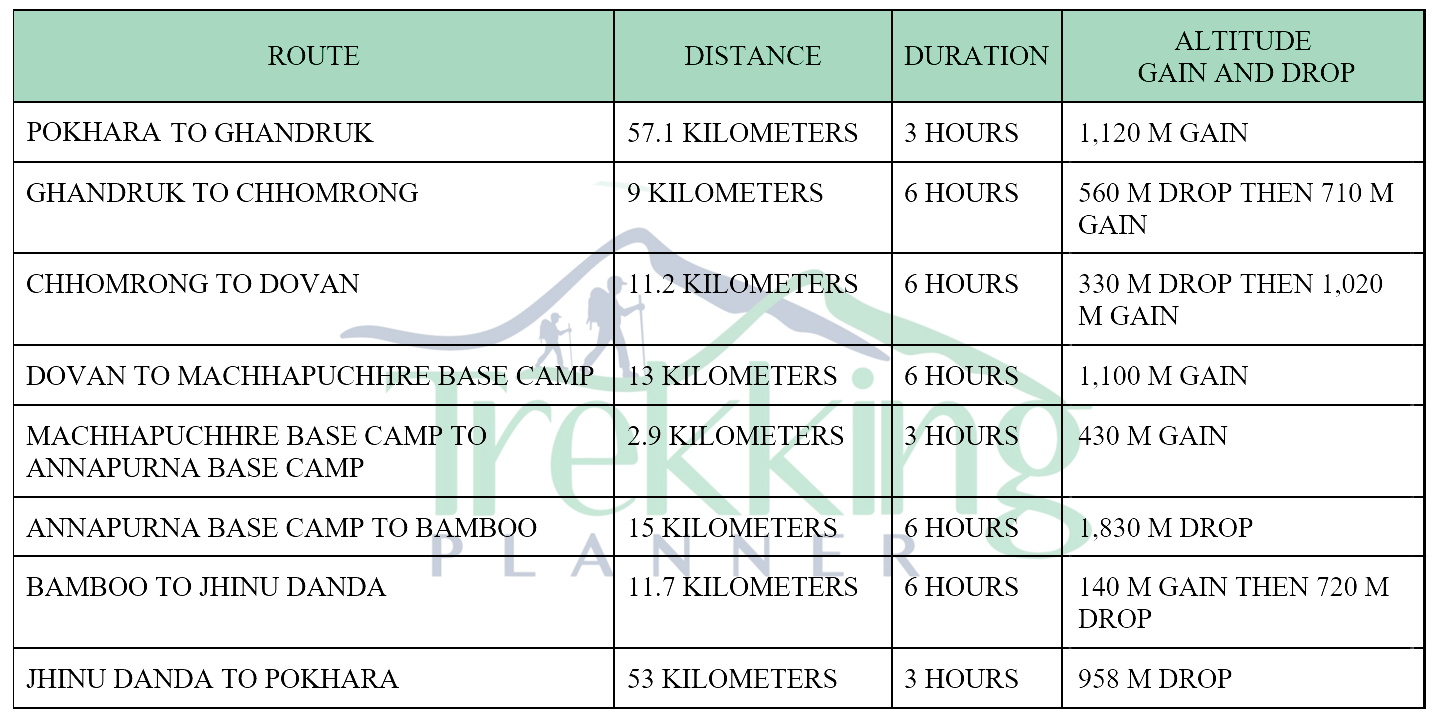
Annapurna base Camp trek Altitude Chart

What are the chances of Altitude Sickness during the Annapurna Base Camp Trek Tour?

The Annapurna Base Camp Trek Tour takes trekkers to significantly higher elevations than sea level, with the highest point being Annapurna Base Camp at 4,130 m. At this elevation, the atmospheric air contains significantly less oxygen than at sea level. Due to lower oxygen levels, trekkers are prone to several symptoms commonly known as altitude sickness or Acute Mountain Sickness (AMS). However, the risk of altitude sickness can be reduced by following several precautionary measures, such as gradual ascent, proper acclimatization, nutritious meals, and adequate hydration. Here are some basics of Acute Mountain Sickness and ways of prevention:

Signs and Symptoms of Altitude Sickness

  • Headache
  • Nausea
  • Vomiting
  • Fatigue / unusual tiredness
  • Dizziness or lightheadedness
  • Loss of appetite
  • Difficulty sleeping
  • Shortness of breath during exertion
  • General weakness or lethargy

Causes of Altitude Sickness

  • Ascending too quickly without allowing the body sufficient time for acclimatization
  • Sleeping at a significantly higher altitude too rapidly
  • Dehydration or insufficient fluid intake
  • Excessive exertion on the body without adequate rest
  • Alcohol consumption or smoking at high elevations
  • A personal history of altitude sickness
  • Ignoring early symptoms and continuing to ascend

Complication of Altitude Sickness

There are mainly two complications of Altitude Sickness which require immediate medical attention.

  • High-Altitude Pulmonary Edema (HAPE): HAPE is a serious condition of altitude sickness in which fluid starts accumulating in the affected person's lungs. Warning signs may include severe and persistent cough, chest tightness, extreme weakness, and difficulty breathing even while resting. Immediate descent and emergency medical attention are essential. 
  • High-Altitude Cerebral Edema (HACE): HACE is a life-threatening condition of altitude sickness in which fluid causes the affected person's brain to swell. Symptoms may include severe confusion, brain fog, unusual behavior, loss of coordination, extreme drowsiness, and loss of consciousness. Immediate descent and emergency medical treatment are required.

If a trekker develops these complications of altitude sickness, continuing to ascend is dangerous. Our experienced guides will assess the situation and take the necessary safety measures, which may include rest, descent, medical assistance, or emergency evacuation when required. 

Prevention of Altitude Sickness

  • Follow the itinerary's gradual ascent.
  • Walk at a slow and steady pace, especially at higher elevations.
  • Do not ignore primary symptoms of altitude sickness.
  • Stay properly hydrated by drinking water regularly throughout the day.
  • Eat regular, nutritious meals to maintain energy during the trek.
  • Avoid alcohol and smoking at high altitudes.
  • Get adequate rest and sleep whenever possible.
  • Inform your guide immediately if you experience any symptoms of altitude sickness.
  • Follow the advice of your experienced trekking guide and medical professionals.

Required Annapurna Base Camp Trek permits?

The trekking region for the 8-day Annapurna Base Camp Short Trek falls within the Annapurna Conservation Area, one of Nepal's largest protected areas. Hence, to enter this protected region, trekkers must obtain the required permits. These permits help support the conservation of the fragile ecosystem and local communities in the trekking region. There are various checkpoints along the Annapurna Base Camp Trek route, and trekkers are required to carry their permits. The following permits are required for the Annapurna Base Camp Short Trek:

1. Annapurna Conservation Area Permit (ACAP)

The Annapurna Conservation Area Permit (ACAP) is a mandatory permit required for the Annapurna Base Camp Trek. This permit is issued by the National Trust for Nature Conservation (NTNC) through the Nepal Tourism Board office in Bhrikutimandap, Kathmandu, or the regional counter in Pokhara. This permit is the key to accessing the Annapurna Conservation Area. The ACAP permit is checked at several checkpoints along the ABC trek route, specifically in Birethanti, Chomrong, and Sinuwa/Bamboo.

The ACAP permit cost are as follows:

SAARC Nationals: NPR 1000 per person (approx 7 USD)

Foreign Nationals: NPR 3000 per person (approx 20 USD)

Children Under 10: Free entry

2. Trekker’s Information Management System (TIMS) Card

The card is issued to ensure the safe tracking of trekkers on popular Annapurna routes. The card is officially issued by Nepal Tourism Board via a registered trekking agency like Trekking Planner Nepal Pvt. Ltd. The cost of the permit is around NPR 1,000-2000, depending upon the nationality.

NOTE: Under the latest trekking regulations in Nepal, trekkers are not required to have a TIMS (Trekkers’ Information Management System) card for the Annapurna Base Camp Trek when travelling with a licensed guide.

What is the Annapurna Base Camp Trek Best Time? 

The 8-day Annapurna Base Camp Short Trek can be done year-round, but certain seasons offer the best experience for trekkers. Trekking during peak seasons offers stable weather and spectacular views thanks to excellent visibility, but the trails can be really crowded. Similarly, trekking in the off-season can offer a different take on the trek due to weather conditions. However, trails are quieter and more peaceful during the off-season. Here's a breakdown of the best time for the Annapurna Base Camp Short Trek:

Spring (March to May): Spring is one of the most popular and busiest trekking seasons for the Annapurna Base Camp Short Trek. After the chilly winters, spring brings with it excellent and balanced weather (mostly clear). Spring provides spectacular views of the surrounding snow-capped peaks and a vibrant landscape featuring lush green hills and blooming rhododendron forests. Daytime temperatures typically range from 10 to 20°C  (50 to 68℉) while at night, temperatures range from 0 to 5°C (32 to 41℉).

Autumn (September to November): Autumn is the best season out of all other popular seasons for the Annapurna Base Camp Trek in Nepal. After the monsoons end, the atmosphere becomes fresher, and the weather becomes more stable. Autumn is arguably the best season to enjoy crystal-clear views of the surrounding mountain peaks due to excellent visibility. Similarly, the major festivals of Nepal, including Dashain and Tihar, also fall in this season. Hence, trekkers can truly immerse themselves in Nepal's culture and traditional rituals during the trek. Daytime temperatures in autumn range from 10 to 20°C (50 to 68℉). Similarly, at night, temperatures drop to roughly -5 to 5°C (23 to 41℉).

Off-season: The winter season (December to February) and the monsoon season (June to August) are considered off-seasons for trekking in Nepal. Frequent snowfall and cold temperatures during winter make the trek particularly difficult, especially at higher elevations such as Annapurna Base Camp (4,130 m/13,550 ft). However, the trails are more peaceful, and the snow-covered landscapes look mesmerizing during winter. The daytime temperature typically ranges from 5 to 15°C (41 to 59℉). At night, the temperature significantly drops to roughly -10 to 5°C (23 to 14℉).

Similarly, frequent rainfall leaves trails muddy and slippery during the monsoon, making it a very difficult season to trek. The visibility is also very low due to overcast conditions. However, the good side of trekking in the monsoon is that it offers peaceful, quieter trails along with unoccupied lodges, which makes it much quieter than during the peak seasons. The average daytime temperatures range from 15 to 25°C (59 to 77℉) while the nighttime temperatures range from 5 to 10°C (41 to 50℉).

What are Accommodation on the Annapurna Base Camp Trek? 

Accommodation is an important logistical aspect of the 8-day Annapurna Base Camp Short Trek. Proper accommodation facilities allow trekkers to rest and recover after long hours of walking throughout the day. Before and after the trek, trekkers stay in star hotels in Kathmandu and Pokhara. Along the trekking route, several types of accommodation are available for trekkers. Here is a brief breakdown of the accommodation options available during the Annapurna Base Camp Short Trekking 8 days:

1. Tea Houses: They are the most common accommodation option available along the Annapurna Base Camp Trekking route. These are mostly locally operated and provide essential accommodation amenities for trekkers. Tea houses are generally available in all the major overnight stops and settlements throughout the Annapurna Base Camp Trek. A typical teahouse provides comfortable twin-sharing rooms with basic amenities such as beds, mattresses, and pillows, as well as a communal dining hall.

2. Guesthouses: Guesthouses are another popular accommodation available along the Annapurna Base Camp Trek route. Guesthouses are available in popular settlements such as Ghandruk, Chomrong, Jhinu Danda, Sinuwa, Bamboo, etc. Compared to basic teahouses, guesthouses offer improved facilities and amenities, such as larger rooms and attached bathrooms with hot showers (in some places). Guest houses can be an excellent choice for trekkers seeking additional comfort as compared to the basic tea houses.

3. Lodges: Several lower-elevation settlements along the Annapurna Base Camp Trek also feature comfort lodges. These lodges are available in settlements such as Ghandruk and Chomrong. These lodges offer the highest-quality facilities in the Annapurna region, including attached bathrooms, hot showers, Wi-Fi, charging facilities, and comfortable beds. Comfort Lodges are significantly more expensive than the basic & standard accommodation options.

Food and Beverages Options During the ABC short Trek

Quality, nutritious food, along with proper hydration, is essential for completing the Annapurna Base Camp Short Trek. Since the Classic Annapurna Base Camp trek itinerary involves several hours of walking each day along challenging trails and landscapes, trekkers require adequate calories to fulfill the body’s energy demand and to recover from the walks each day. The accommodation facilities along the Annapurna Base Camp Short trekking route offer a wide variety of dishes, ranging from traditional Nepali to popular international dishes. Here is a summary of the wide range of food and beverage options  available in the accommodation facilities during the Annapurna Base Camp Short Trek:

  1. Breakfast: Bread, toast with jam or honey, eggs, pancakes, porridge, oatmeal, chapati, potatoes.
  2. Lunch and Dinner: Dal Bhat, Veg Fried Rice, Egg Fried Rice, Rice Pudding, Momo, Noodles, Pasta, Macaroni, Spaghetti, Pizza, Sandwiches, Potatoes, Fried Chips, Sherpa Stew, Burgers, Spring Rolls, Yak Steak, Thukpa, and others.
  3. Desserts: Apple pie with custard, Fried Mars Bars, Chocolate Pudding, Rice Pudding, Apple Filter, German Bakery Products, and Fried Snicker rolls.
  4. Beverages: Sherpa Tea, Masala Tea, Lemon Tea, Ginger Tea, Hot Lemon with Honey, Hot Chocolate, Coffee, and more.

Toilet and Washing Facilities During the Annapurna Region

The Nepal Annapurna Trek route is one of the most well-developed trek routes in Nepal. Hence, the toilet and washing facilities are better than those on many other remote Himalayan treks. Having said that, the facilities will be basic as trekkers gain altitude. Lower-elevation settlements provide comfortable toilet and washing facilities. Still, in higher-elevation destinations such as Machhapuchhre Base Camp (MBC) and Annapurna Base Camp (ABC), the facilities are pretty basic. Here are some general aspects to consider:

1. Bathroom and Hot Shower Facilities

In lower-altitude settlements such as Ghandruk, Chomrong, Jhinu Danda, and Sinuwa, many accommodation facilities offer private bathrooms (western-style) and hot showers. But trekkers need to pay extra for the hot shower. Also, as you move to higher altitudes, locations such as MBC and ABC offer shared bathroom facilities (squat-style) usually located outside the teahouse. While a hot shower at a high altitude is manageable, the cost of the Annapurna Base Camp Trek can be significantly higher than in lower-altitude regions.

2. Washing Facilities

Most accommodation facilities along the Annapurna Base Camp Trek provide running water for basic washing purposes. At lower-altitude settlements, these facilities are generally more comfortable and accessible. However, at higher altitudes, the availability of running water and hot water for washing may be limited. Even if they are available, an additional charge is required. During colder seasons and at higher altitudes, trekkers generally prefer to use wet wipes rather than a full wash.

3. Carry Toilet Paper and Personal Hygiene Items

Trekkers are strongly encouraged to carry their own toilet paper and personal hygiene items, such as hand sanitizer, soap, towels, and toiletries. Access to running water and personal hygiene products can be very limited at high-altitude destinations, such as the Machhapuchhre Base Camp (MBC) and the Annapurna Base Camp (ABC), due to several unforeseen circumstances. Maintaining good personal hygiene reduces the risk of illness throughout the trek and keeps trekkers fresher and more energetic.

Internet and Communication Facility on the Annapurna

Internet and communication facilities are available throughout the Annapurna Base Camp Trek. However, connectivity can vary with weather conditions and altitude. Trekking Planner Nepal Pvt. Ltd. provides all trekkers with free Nepalese SIM cards (NCELL). Still, the data packages have to be purchased at an additional cost. Mobile network coverage is generally very reliable in lower-elevation areas such as Pokhara, Ghandruk, Chomrong, Bamboo, and Dovan. Still, the signal can weaken as trekkers reach higher elevations, such as Deurali, Machhapuchhre Base Camp (MBC), and Annapurna Base Camp (ABC).

Most accommodation along the ABC trek in Nepal also provides Wi-Fi. In lower-elevation settlements, Wi-Fi is often free or available for a very minimal charge. The internet speed is enough for messaging, browsing, and sharing photos. However, at higher-elevation settlements, internet speeds can be slower and very unreliable. Also, Wi-Fi at higher altitudes is significantly more expensive than at lower altitudes.

The Internet and communication facilities are available in most parts of the Annapurna Base Camp Trek. However, trekkers cannot always fully rely on the internet quality and speed. Similarly, mobile networks can occasionally be interrupted, especially at higher altitudes. However, many trekkers also see this as an opportunity to disconnect from their personal lives and outer world and fully immerse themselves in the beauty of the Annapurna Sanctuary.

Phone and Gadget Charging on the ABC Trek

Trekkers frequently use phones and electronic gadgets for communication, social media, and photography. Hence, charging becomes an important amenity during the Annapurna Base Camp Short Trek. Electricity is generally available in all settlements along the Annapurna Base Camp Trek route. Still, its reliability gradually decreases as the trek ascends to higher-altitude settlements such as Deurali, Machhapuchhre Base Camp (MBC), and Annapurna Base Camp (ABC).

Most teahouses and lodges offer charging facilities for electronic devices, but charging is often available for an additional fee. The costs typically range from NPR 200 (approx. USD 1.5) to NPR 500 (approx. USD 3.5) per device or per hour, depending on the altitude or remoteness of the location. The charging facilities are often located in a common dining room rather than individual rooms.

Trekking Planner Nepal Pvt. Ltd. recommends trekkers to carry a power bank with a capacity of around 10,000-20,000 mAh. Also, you can see varieties of plugs including Type C, D and M in the teahouses so to ensure a reliable use of electric gadgets please consider bringing a universal travel adapter.

Peoples of Annapurna Base Camp: Culture and Tradition

Several indigenous communities with distinct cultures and traditions live in the Annapurna Region. Here are some of the local cultures and traditions you can experience during your trek to the base camp of Annapurna.

Aside from the Gurungs, the Annapurna Region is home to other ethnic groups such as the Magars, Thakalis, and Manangis, each with its own culture and traditions. The Magars are famed for their warrior-like characteristics, and their martial arts and archery talents can be seen during festivals such as the Ghode Jatra. The Thakalis are well-known for their business acumen and are prominent dealers and hotel owners in the region. The Manangis, on the other hand, are Tibetan Buddhists with their own traditions, language, and rituals.

Interacting with the people is an important component of the Annapurna Base Camp Trek. You may explore their villages, learn about their customs and traditions, sample their local cuisine, and attend festivals and cultural events. It is critical to respect the customs and traditions of the local people and to interact with them in a friendly and respectful manner

Do I Need Travel Insurance for the Annapurna Base Camp Trekking?

Although not mandatory, getting travel insurance for the  Annapurna Base Camp Trek is highly recommended. It is essential to select an insurance policy that covers high-altitude trekking, medical crises, emergency evacuation, and repatriation. When choosing a travel insurance policy, it is essential to carefully read the fine print and ensure that the insurance you are getting covers all potential risks and hazards associated with trekking. Some insurance policies may exclude coverage for activities such as high-altitude trekking, leaving you without coverage if you have any problems during your trek.

It is also important to check that your insurance policy covers emergency medical bills and evacuation in the event of a medical emergency. Medical facilities in the Annapurna Region are limited. In the event of a serious medical emergency, helicopter evacuation may be required and could be costly. You should also ensure that the insurance policy covers travel cancellation, trip interruption, and lost or stolen luggage. These are common problems that might arise when traveling, and having coverage can help you recover the costs associated with them.

In short, get your Travel Insurance that covers for:

  • Medical Expenses
  • Emergency Medical Evacuation
  • Adventure Sports Coverage
  • Pre-existing Medical Conditions
  • Trips Cancellation and Interruption
  • Loss of Baggage
  • Personal Injury

Can a beginner trek the Annapurna Base Camp 8 Days Package?

A beginner with a basic level of physical fitness, proper preparation, and a willingness to listen to the advice and suggestions from experienced guides can easily complete the 8-day Annapurna Base Camp trek. The Annapurna Base Camp short trek is moderately difficult. The 8-day Annapurna Base Camp Short trek is shorter than the Classic Annapurna Base Camp Trek. However, it may still be difficult for beginners due to consecutive days of walking, steep ascents and descents, and the highest elevation at Annapurna Base Camp, at 4,130 m/13,550 ft.

Previous Trekking experience is not necessarily required, but starting to prepare a few weeks before the trek is highly recommended. Getting involved in physical activities such as hiking, jogging, cycling, stair climbing, and strength training a few weeks before the trek can significantly improve the cardiovascular and muscular fitness of trekkers and help them during the actual trek. Throughout the trek, our experienced guides maintain a comfortable pace and look after the trekkers to ensure a safe and comfortable trek.

Beginner trekkers need to prepare the most for high-altitude trekking. At a maximum altitude of 4,130 meters, there is a risk of altitude sickness. Altitude sickness can be of major concern for novice trekkers. But with steady ascent, acclimatization, hydration, and careful navigation, the altitude can be conquered. So if you are new to Nepal Himalayan trekking, it is better to start physical and mental preparation through simulation. Also, as altitude increases, the region becomes more remote, with only basic facilities, which can be frustrating for beginners. Therefore, it is better to research the area, keep an open mind, and accept whatever facilities you receive without complaint. 

Hence, with proper physical preparation, determination, and a positive mindset, many beginner trekkers complete the Annapurna Base Camp Short Trek. The Annapurna Base Camp Short Trek - 8-day package can be a great choice for beginners seeking to trek the Annapurna region in a limited timeframe.

Note: For more detailed information, read our guide: How to Plan Your Annapurna Base Camp Trek in Nepal.

How should you prepare for the Annapurna short trek?

The 8-day journey to Annapurna Base Camp requires both physical and mental preparation. Here are some suggestions that might help you with the preparation for your adventure:

  • Physical Fitness: The Annapurna Base Camp treks require several hours of trekking each day on difficult uphill and downhill trails. As a result, it is of the utmost importance to maintain your physical fitness through regular exercise, including cardio, strength, and endurance training. This will build your strength and help you walk for 5-6 hours per day.
  • Walking Practice: Walking practice is essential for getting used to walking long distances in mountainous terrain. You must begin by walking modest distances on difficult terrain and progressively increase the distance and elevation.
  • Proper Equipment: Proper equipment is essential for a comfortable and safe hiking experience. Invest in durable hiking boots, weather-appropriate clothing, a warm jacket, a raincoat, a high-quality backpack, and other important trekking equipment.
  • Preventing Altitude Sickness: The Annapurna Base Camp hike involves ascending to a relatively high altitude, and altitude sickness can occur due to sudden elevation changes. It is essential to fully acclimate by getting adequate rest and taking breaks, and possibly taking altitude sickness medication if required.
  • Mental Preparation: Mountain trekking is an adventure that may be both physically and mentally demanding. It is important to psychologically prepare yourself for any obstacles that may arise during the walk.
  • Consult your Doctor: Before embarking on a trekking adventure, consult your doctor to ensure that you are physically fit enough to handle the physical demands of mountain trekking.

Annapurna Base Camp Short Trekking Vs Annapurna Circuit Trek

The Annapurna Base Camp Short Trek and the Annapurna Circuit trek are both significantly renowned treks through the Annapurna Sanctuary. Each of these treks offers a unique trekking experience. Although both of these treks take place in the Annapurna region, they differ in duration, altitude, distance, and landscapes. The right choice between these two ultimately depends on the trekker’s available time, fitness level, experience, and preferences. If you want a short trek with moderate difficulty while witnessing Mt Annapurna, you can go for the ABC short trek. But if you want a challenging trek with the opportunity to cross Thorong La Pass and can dedicate longer days to trekking, then choose the Annapurna Circuit Trek.

Features

Annapurna Base Camp Short Trekking

Annapurna Circuit Trek

Introduction

A short trek in the Annapurna Sanctuary that reaches the maximum altitude at Annapurna Base Camp.

A classic long trekking journey that loops around the Annapurna massif while reaching the maximum altitude at Thorong La Pass.

Duration

8 Days

17 Days

Trip Start and End

Starts in Pokhara and Ends at Pokhara

Starts in Kathmandu and Ends at Kathmandu

Main Destination

Annapurna Base Camp

Thorong La Pass and the complete Annapurna Circuit

Difficulty

Moderate

Moderate to Challenging

Major Highlights

Annapurna Base Camp, Annapurna Sanctuary, Machhapuchare Base Camp, Gurung villages, rhododendron forests, and Jhinu hot springs

Thorong La Pass, Manang, Muktinath, Kali Gandaki Valley, Tibetan-influenced villages, and diverse Himalayan landscapes

Mountain Views

Close-up views of Annapurna I, Annapurna South, Machhapuchare, Hiunchuli, Gangapurna, and surrounding peaks

Wide-ranging views of Annapurna I, II, III, IV, Dhaulagiri, Manaslu, Gangapurna, Tilicho Peak, Nilgiri, and other Himalayan mountains

Landscape

Terraced farmland, Gurung villages, rhododendron and bamboo forests, river valleys, alpine terrain, glaciers, and the Annapurna Sanctuary

Subtropical valleys, forests, deep river gorges, alpine landscapes, high mountain terrain, and the dry, windswept landscapes of Mustang

Cultural Experience

Experience the traditions, hospitality, and lifestyle of the Gurung communities, especially around Ghandruk and Chomrong

Experience the cultural transition from Hindu and Gurung settlements to Tibetan Buddhist communities in Manang and the upper Mustang region

High Mountain Pass

No major high mountain pass

Crosses Thorong La Pass at 5,416 m (17,769 ft), one of the highest trekking passes in Nepal

Ideal For

Travelers with limited time who want to reach a Himalayan base camp and enjoy close-up Annapurna views

Experienced or physically prepared trekkers seeking a longer, more varied, and more challenging Himalayan adventure.

Best Choice If You Want

A shorter trek, close-up mountain scenery, Annapurna Base Camp, and no high mountain pass

A longer and more challenging trek with Thorong La Pass, diverse landscapes, and a broader cultural experience

Note: Check out our Annapurna Circuit Trekking - 17 Days package

Annapurna Base Camp Trekking Tips for Females

  • Prepare for irregular or unexpected periods due to altitude.
  • Bring extra menstrual cups, tampons, or pads along with disposal bags and intimate wipes.
  • Carry period supplies in your daypack instead of using the porter bag.
  • For better management and less waste, consider using a menstrual cup.
  • Although not mandatory, for usage on the route and at night, bring a female urination device (such as Shewee).
  • Always keep your own hand sanitizer, wet wipes, and toilet paper on hand.
  • For quicker and cleaner trail restroom stops, use a pee towel.
  • For brief showers, bring deodorant wipes, dry shampoo, body wipes, and facial wipes.
  • Bring non-cotton underpants and sports bras that dry quickly.
  • As soon as you arrive, change into dry lodge attire.
  • Apply moisturizer, SPF lip balm, and high-SPF sunscreen every day.
  • Hire a trustworthy guide, especially if you're traveling alone (a female guide option is available).
  • Train with cardio and pack-weighted walks weeks in advance.
  • Discuss altitude medication with your doctor.
  • Stay well hydrated and follow the standard acclimatization itinerary.

Responsible Trek (What to Do and Not to Do)

Responsible Trek is an ethical, environmentally friendly, and socially responsible approach to trekking that helps protect and preserve the fragile ecosystem and the cultural heritage of the Annapurna region. The Annapurna Conservation Area is a protected region home to unique flora and fauna, as well as local ethnic communities. Every trekker can play their vital role in protecting this beautiful trekking destination by following some simple guidelines.

1. What to Do During Annapurna Base Camp Trek?

Respect the local traditions and customs (especially while visiting and observing religious sites such as monasteries, chortens, prayer walls, etc) by dressing modestly and asking for permission before photographing.

  • Walk clockwise around stupas, mani walls, and prayer wheels as a sign of respect and understanding towards Buddhist culture.
  • Carry a reusable water bottle to reduce plastic waste.
  • Dispose of waste responsibly or carry it with you until you find a designated waste disposal center.
  • Stay on the marked trekking trails to protect the fragile vegetation and prevent soil or vegetation erosion.
  • Support local communities by staying in local tea houses/lodges and purchasing locally produced food products and handicrafts whenever possible.

2. What Not to Do During Annapurna Base Camp Trek?

  • Do not litter or leave any waste along the trail during the trek, including plastic food wrappers, plastic bottles, or cigarette butts, etc.
  • Do not disturb the wildlife, damage plants or natural vegetation, or get involved in any sort of activities that hamper the natural ecosystem in the Annapurna Conservation Area.
  • Avoid disturbing or making excessive noise, especially in and around monasteries, local settlements, and wildlife habitats.
  • Avoid wearing excessively revealing clothes, especially in and around religious and cultural sites. It may not entertain the religious and cultural sentiments of the local people.
  • Never leave the marked trail or attempt to walk through difficult sections in unsafe conditions without your guide's advice.
  • Avoid using single-use plastics whenever possible and help keep the Himalayas clean for future generations.

Conclusion

The 8-day Annapurna Base Camp Short Trekking is a perfect choice for trekkers seeking to experience the unparalleled beauty of the Annapurna region within a limited timeframe. From traditional settlements to the breathtaking beauty of the Annapurna Sanctuary and panoramic views of snow-covered peaks, including Annapurna I, Machhapuchhre, Annapurna South, Annapurna III, Hiunchuli, and others. Whether you are a first-time trekker or an experienced trekker, this trek is a perfect blend of everything.

At Trekking Planner Nepal Pvt. Ltd., we are committed to making your trek journey safe, comfortable, and enjoyable. Our experienced team of guides, support staff, and office representatives, along with a well-planned itinerary and logistics, ensures a hassle-free trekking experience for our clients. Join us for the Annapurna Base Camp Short trek - 8 days. Contact Trekking Planner Nepal Pvt. Ltd. today and start planning your journey to the Annapurna Base Camp.

Annapurna Base Camp Short Trekking - 8 Days Equipments

If you are preparing for a high-altitude Himalayan adventure in Nepal, there is always some confusion about what to pack. It is essential to carry the right gear and equipment for a comfortable, safe, and enjoyable experience. All trekkers should properly pack and carry all the essential items. 

However, overpacking is another common mistake that can make the journey tiring. So here is a carefully crafted packing list that includes everything you need. From general items, cloth layers, headgear, footwear, to accessories and first aid, the list consists of light and smart packing items for every challenging mountain condition.

Note: You do not need to bring all the items mentioned below to Nepal. There are several trekking shops in Kathmandu or Pokhara where you can buy or rent high-quality gear at a reasonable price. So, feel free to pack light and purchase or rent any missing items after your arrival in Nepal. Also, members from Trekking Planner Nepal Pvt. Ltd. can also guide and assist you to find the best deals in gear and equipment in Thamel, Kathmandu.

What Does the Company Provide?

  • We give you a free duffel bag (must return), buffs, trekking cap, trekking map, and t-shirt during your pre-trip meeting in Kathmandu. The duffel bag will be used to pack your trekking supplies.
  • For every two participants, we assign one porter. The porter will carry the duffel bag, which should weigh around 10 kg/22 lbs., throughout the walk.
  • We can provide a down jacket for USD 35. In case of loss or damage, you need to pay back the cost of USD 100 per item.
  • We can provide a sleeping bag for USD 35. In case of loss or damage, USD 100 per item must be paid.
  • You can safely store your extra luggage (items not required on the trek) at the hotel in Kathmandu. Our team can happily assist and help.
  • We provide a free Nepal SIM card (Ncell) to all our trekkers during the pre-trip briefing in Kathmandu. Data packages can be purchased at an additional cost.
General
  • Daypack (5-12 kg recommended) with rain cover
  • Reusable water bottle
  • Water bladder for the day bag
  • Water purification tablets or UV water purifier
  • Small quick-dry towel
  • Hand sanitizer, toilet paper, small soap, and shampoo
  • High-protein snacks (mountain bars or nuts)
  • Waterproof/dry bags for documents and valuables
  • Power bank or extra batteries
  • Headlamp or mobile flashlight
  • Trekking poles
  • Thermos for hot water during the nighttime
Upper Body Layers

  • Technical fabric base layer thermals are light for warmer months, heavy for colder months
  • Technical fabric t-shirts and sleeve sweaters or high-necks
  • Fleece jacket or down jacket
  • Windproof jacket for the walk as it gets windy
  • Waterproof rain jacket
  • Sports bras (women)
Lower Body Layers

  • Thermals inner
  • Hiking pants at least 3
  • Comfortable pants for teahouses
  • Waterproof, windproof shell pants
  • Hiking shorts
  • Technical fabric/quick drying undergarments (can be washed during the trek)
  • Sleeping clothes as per the comfortability
Footwear & Accessories

  • Marino Wool or warm socks
  • Hiking socks
  • Liner socks
  • Trekking/hiking boots (waterproof recommended)
  • Crampons (for mountain passes)
  • Casual shoes or sandals that are comfortable for the time in the tea house
  • Gaiters (lightweight for rain and snow)
  • Woolen gloves for the tea house
  • Hard-shell windproof outer gloves for the walk
  • Trekking poles
Head & Sun Protection

  • Sun hat or cap (We'll provide you with a trekking cap)
  • Warm woolen hat or beanie
  • Scarf/Neck Buff (highly recommended to get saved from wind and cold)
  • Polarized sunglasses
  • Headlamp or mobile torch light for nighttime
  • Sunscreen SPF- 50+
  • Lip balm or Vaseline
  • Ointment cream
Personal & Medical Kits
  • Sunscreen SPF- 50+
  • Lip balm or Vaseline
  • Ointment cream
  • Cough Syrup and strepsils (recommended for Khumbu Cough)
  • Creams and medicines for any allergies or personal conditions
  • Small towel
  • Toilet paper, small soap, and shampoo
  • Anti-Diarrhoea, Painkillers, Blister Plasters, and Anti-Inglammatories

(Note: Our guides carry medications, oxygen cans, and first aid kits during the trip. However, personal kits and medications are recommended.)

Travel Documents

  • Passport
  • Extra copies of passport-sized photos
  • Waterproof/ziplock bags for documents and valuables
Miscellaneous

  • Reusable water bottle
  • Water bladder for daypack
  • Water purification tablets or UV purifier
  • High-protein snacks (energy bars, nuts)
  • Power bank or extra batteries
  • Universal Plug Adaptar
  • Charging Cables
  • Travel lock
  • Camera and mobile phone
  • Pillowcase (in case of allergies)
  • Sleeping clothes
  • Cards / Book
  • Thermos for hot water at night

What Makes Trekking Planner Different?

Deep Dikshya Foundation

In the Himalayan nation of Nepal filled with eight out of the fourteen world’s highest mountains lies a chance of adventure that creates unforgettable memories. With all those memories and [...]

Explore More
Sustainable Toursim
Sustainable Toursim

Trek Responsibly. Leave a Positive Impact. At Trekking Planner Nepal Pvt. Ltd., sustainable tourism in Nepal is not just [...]

Explore More
Responsible Tourism
Responsible Tourism

Responsible tourism is not just a concept, it is the guiding philosophy of Trekking Planner Nepal. As a pure Nepalese-owned trekking company with over 20 years of experience, we believe [...]

Explore More

Annapurna Base Camp Short Trekking - 8 Days FAQs

general-infoGeneral
Why Annapurna Base camp short Trekking?

We have planned the itinerary days and program so that people with short frame of time can enjoy the walks to Annapurna Base Camp, allows you to stand right in the heart of massive Annapurna Himalaya at base camp.

What is the Annapurna Base Camp Short Trek?

The Annapurna Base Camp Short Trek is a scaled-down version of the famous Annapurna Base Camp (ABC) trek. It provides a shortened path for individuals with limited time who nevertheless wish to appreciate the breathtaking vistas of the Annapurna region.

Where does the Annapurna Base Camp Short Trekking begin?

The common beginning place for the short trek to Annapurna Base Camp is Nayapul, which is easily accessible from Pokhara, a famous tourist destination in Nepal.

What is the trek's highest point in Annapurna Base Camp Short Trekking?

The highest point of the walk is the Annapurna Base Camp, which is located at an elevation of approximately 4,130 m above sea level.

Itinerary and duration
What if I get ill while on Ghorepani Poon Hill Trekking Route?

It depends on the nature of your illness. If you suddenly feel dizzy or weak, you have to sit or lie down. If you still feel sick, keep a warm and rest until you can get medical help. You will be carried down or evacuated if you do not start to feel better. Although we provide a first aid kit, we advise travelers to take a personal first aid kit too.

In serious cases, you may need helicopter rescue. Our guide will suggest you use it if your condition is very serious. Therefore, helicopter rescue insurance is necessary for every trekker before you come to trek with Trekking Planner.

What is the duration of the Annapurna Base Camp Short Trekking?

The Annapurna Base Camp Short Trekking can take anywhere from 7 to 10 days to complete, depending on the starting point and trekking pace. You can also customize your schedule based on your budget, needs, and time constraints.

Can I extend my journey to Annapurna Base Camp to see other surrounding areas?

Yes, you may extend the walk to include surrounding places such as Mardi Himal or continue on to Jhinu Danda, which is known for its natural hot springs. These additions will extend your trekking schedule by a few days.

Best Time To Trek
When is the best time to trek to Annapurna Base Camp?

This walk is best done in the spring (March to May) and autumn (September to November) seasons. The weather is normally consistent, allowing for clear mountain views and comfortable walking conditions.

Prepration and suitability
Is it necessary to carry Trekking poles?

Yes, trekking poles make you easy to walk over rough or steep terrain. Trekking poles makes your body and leg to move more safely. Furthermore, it will help relieve the stress on your legs. So, we suggest you use them.

What is the difficulty level of the Annapurna Base Camp trek?

The Annapurna Base Camp Short Trekking is considered as moderately challenging trek demanding good level of fitness. The trail has considerable uphill and downhill walking, although it is comparatively less difficult than the lengthier ABC trek.

Is it possible to rent trekking equipment in Nepal?

Yes, trekking equipment may be rented in large cities such as Kathmandu and Pokhara. However, for essential items such as trekking boots and personal gear, it is preferable to carry your own to ensure proper fit and comfort during the journey.

Is travel insurance required for the Annapurna Base Camp journey?

Yes, having travel insurance that covers trekking activities as well as medical situations is strongly advised. It should also include evacuation coverage in the event of major medical problems throughout the expedition.

Food, Accomodation and Facilities
How are the room and accommodation on route trekking?

On this trek around main villages we provide excellent lodge where available as per the budget and cost of the trek, either with rooms attached bath / toilets or common.

But from Chomrong village onward where choice of facilities lacks due to limited numbers of lodge on each day walks, but be glad that where on this world one can find a nice and cozy right next and beneath world’s highest peaks.

Which you can find only on Annapurna Base Camp at the height of 4,130 m where room faces tremendous views of high peaks and surrounding beautiful landscapes.

Is tea house and Lodge different on trekking?

Tea-House Trekking an old word, when much commercial trekking was not popular in the Himalaya, where camping was more popular due to lack of tea-house and lodge in villages on route.

Tea-House is simple shops with rooms to shelter travelers with basic facilities providing simple local meals, as trekking became more popular around the region where Tea-House turned into better lodge to provide great comfort of travelers.

At present even though accommodation are much upgraded with many good facilities with warm rooms, toilets, showers (hot / cold) and serving great meals the term Tea-House is tagged rather than lodge trekking, as it become a customary or a tradition from early times till present.

What type of meals served in mountain lodge?

Meals provided from the lodge where most of lodge owner family member cooks meals for the guest where some high standard lodge, a cook is hired from cities to give the best to the customers from famous Nepalese Dal Bhat (boiled rice with lentil soup and semi spicy vegetable or meat curries). Includes Tibetan, Chinese to Continental dishes as well in the menu, where fresh vegetables and fruits depend upon season wise and availability.

Meals according to the list of menu provided, where some vegetable and fresh fruits depend upon seasons, all meals are well cooked and hygienically prepared so that customers can come back and use the same lodge and restaurants and keep the business flowing, flourishing.

For larger groups it is best to have set meals as this save time and energy and much better for all including the lodge owner.

Is communication and internet connection available during the Annapurna Base Camp short trek?

Most teahouses and hotels along the trail provide limited internet connectivity. However, as you travel higher into the higher elevations, connectivity may become intermittent or absent. The tea houses provides you Wi-Fi services but may charge you extra.

Can I use credit cards or ATMs during the Annapurna Base Camp trek?

Along the route, credit card and ATM services are not widely available. You need to carry enough Nepali rupees in cash to cover your expenses during the trek.

Are there any restroom facilities along the Annapurna Base Camp trekking route?

Yes, there are restrooms along the trekking path. However, in many instances, these are just squat toilets with no running water. It is advisable to bring your own toilet paper and hand sanitizer.

Health and Safety
What about safe drinking water?

Water is the main cause for health risk on mountains or in third world developing countries; we are extremely take care where in camping all drinking waters are thoroughly boiled to high temperatures and the cooling off to provide guest to pour in the water bottles.

While on Tea-House Treks the lodge owner or our guide will make sure that drinking water provided is safe to drink after its been boiled, filtered and ready for drinking, some areas in Annapurna do have safe drinking water post provided by local community known as ACAP (Annapurna Conservation Project) charging minimum price for a liter.

We totally disapprove plastic bottle to buy and drink, pollution to the environment as long one will use and re-cycle it, plastic bottle water we allow sometime unless people are desperate for drinking due to under de-hydration condition, or in ill health on walks.

Is there any risk of altitude sickness during the Annapurna Base Camp Trek?

Yes, there are altitude hazards during the Annapurna Base Camp Short Trek, particularly at higher altitudes. Some trekkers are concerned about altitude sickness. It is essential to adequately acclimatize, stay hydrated, and be aware of any indicators of altitude sickness, such as headache, nausea, dizziness, or shortness of breath. If symptoms worsen, it's essential to descend to a lower altitude right away.

What level of fitness is required for Annapurna Base Camp trek?

While the Annapurna Base Camp Short Trek is rated as fairly difficult, it still requires several days of continuous walking as well as rising and descending. Physical fitness, frequent exercise, and prior trekking experience will be advantageous. Before embarking on the journey, it is essential that you contact with a doctor, especially if you have any pre-existing health concerns.

Is there anything I should do to ensure my safety during the Annapurna Base Camp trek?

Yes, some safety considerations are as follows:

  • To avoid altitude sickness, acclimatize correctly and ascend slowly.
  • Drink plenty of water to stay hydrated.
  • Follow the directions of your guide and also keep eye on the weather.
  • Carry a basic first-aid kit as well as any prescriptions that may be required.
  • Avoid drinking untreated water and eating raw or undercooked food.
  • Observe local norms and traditions when interacting with communities.
  • Avoid drinking alcohol and if possible meat items as it might be difficult for you to digest.
What if I become sick or injured on the journey?

Inform your guide right away if you become ill or injured. Also, if you are in the network coverage area, consult with your Tour operator as well.  They will analyze your condition and treat you accordingly. You may need to descend to a lower altitude for better medical assistance if necessary.

What communication alternatives are available during an emergency around Annapurna Base Camp Short Trekking ??

Some teahouses and lodges may feature satellite phones for communication in case of an emergency. Otherwise, your guide can work with local authorities to arrange for emergency evacuation if necessary.

Cost, Booking, Cancellation & Gurantee
What happens if the weather conditions get poor during the Annapurna Base Camp Trek?

In the event of severe weather, your guide will make choices about the trekking path and whether it is safe to continue. They may advise staying in one spot until the weather improves in order to improve visibility and safety.

Permits & Logistics
How can I get from Kathmandu or Pokhara to the Nayapul starting point of Annapurna Base Camp short trek?

From Kathmandu, you can take a flight or a tourist bus to Pokhara. You can hire a private vehicle or take a public bus from Pokhara to Nayapul, which is about a 1.5 to 2-hour journey away.

Best Selling Package
13%
Off
Price Per Person
US$699
US$799
  • 1 paxUS$799
  • 2 - 10 paxUS$699
  • 11 - 20 paxUS$650
  • 21 - 30 paxUS$620
Talk to an Expert
Dipak Lamichhane
Travel Consultant
Dipak Lamichhane
+977 9851071767

What Our Clients Say

guestguestguest
1112+ Happy Clients
Testimonials from Google, TripAdvisor, Trustpilot & more.
5 out 5 based on the opinion of 15 people reviews

Simo

I had wonderful trek to Annapurna Base Camp with Treckking Planner. Both guide and porter were friendly and everything was organised professionally.

n
nordictraveller825 - Finland
March 25, 2026

Annapurna Base Camp Trek 2025 August.

there were some concerns in the beginning of the trek as the time of the return flight to kathmandu were booked without discussing with us. i thought we couldnt make it and i brought up...

F
Fajar Y - Singapore
August 20, 2025

An unforgettable journey to Annapurna Base Camp

I recently completed a 10-day trek to Annapurna Base Camp, and it was one of the most unforgettable experiences of my life. The landscapes were absolutely breathtaking – from lush forests and terraced fields to...

V
Valeriana - Bahamas
April 30, 2025
5 out 5 based on the opinion of 1 people reviews

Fun in Annapurna

Guide SudipPorter: SujanOur guide, Sudip made us feel very safe and ensured we felt okay. He put a lot of effort into teaching us the culture and history of the region. Our porter Sujan worked...

F
Flynn Hutchins - Australia
January 08, 2026
5 out 5 based on the opinion of 3 people reviews

The Annapurna Base Camp trek typically takes 7–12 days, depending on the route and pace.

I recently completed the trek to Annapurna Base Camp (ABC), and I can confidently say that the entire experience was made unforgettable thanks to our amazing guide, [Anish Phuyal].
 

S
Sushan g - Central African Republic
October 17, 2024

Great landscape, great people

It was a very, very nice time on the tour to ABC. Thanks to Sudip Bhatta, he is a great and cheerful person and was happy to tell us something about the area or about...

D
Daniel Hofmann - Germany
December 17, 2023

Great landscape, great People

It was a very, very nice time on the tour to ABC. Thanks to Sudip Bhatta, he is a great and cheerful person and was happy to tell us something about the area or about...

D
Daniel Hofmann - Germany
December 17, 2023

You May Also Like

Annapurna Mountain View
Duration: 6 Days
5.0 (6 Reviews)

Annapurna Skyline Trek - 6 Days

PokharaPokhara
Per Person
US$449US$549
Trip Details
Ama Dablam with Everest Base Camp Trek-15 Days
Duration: 15 Days
5.0 (2 Reviews)

Ama Dablam with Everest Base Camp Trek-15 Days

KathmanduKathmandu
Per Person
US$1599US$1699
Trip Details
Helicopter parked at Annapurna Base Camp surrounded by snow-capped peaks during a helicopter tour
Duration: 1 Days
5.0 (2 Reviews)

Annapurna Base Camp Helicopter Tour - 1Day

KathmanduKathmandu
Need Help? Call Us+977 9851071767