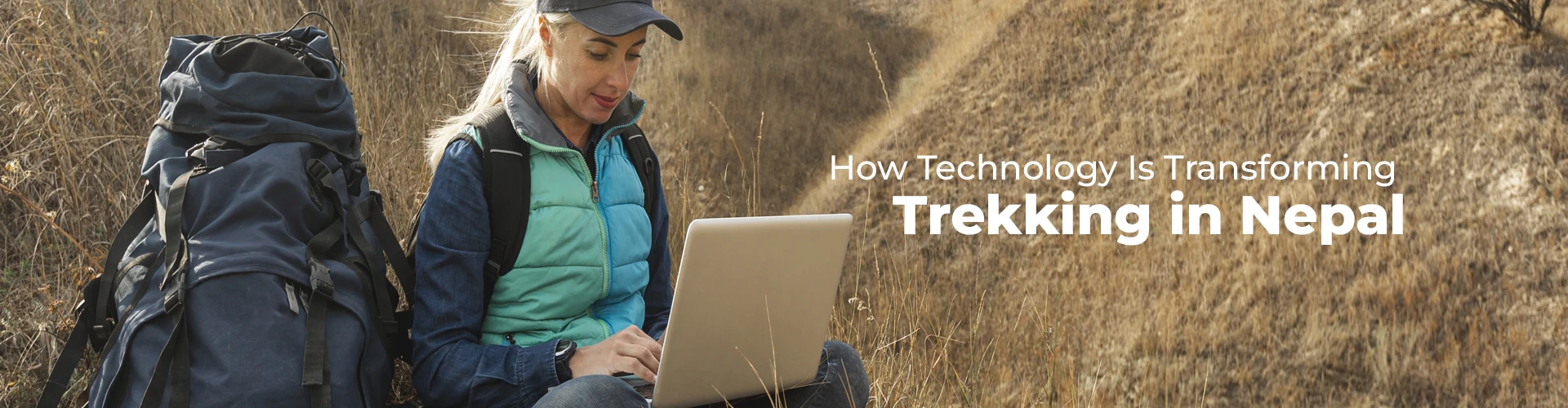
How Technology Is Transforming Trekking in Nepal
The Himalayas of Nepal comprise eight out of the world’s fourteen eight-thousanders, including Mount Everest, the tallest in the world. So, whether you are searching for the iconic view of Everest, or any other majestic peaks like Annapurna, Langtang, Manaslu, and Kanchenjunga, Nepal is just the right place to do so. In terms of remoteness and closeness to nature, there are only a few countries in the world that meet these expectations, and one of them is Nepal.
The towering peaks, followed by authentic hospitality and cultural encounters, make the journey truly remarkable. Although the remoteness raises some safety concerns due to unpredictable mountain weather, altitude sickness, and tricky navigation, fortunately, modern technology has bridged those gaps.
As of 2026, technologies are building rapidly even in the field of tourism. From GPS navigation and mobile apps to gadgets, these technologies enhance the trekking journey in Nepal, making every step a memorable experience. The smart tools mainly help in communication and navigation.
However, there are other tools, such as smart wearables, that make your overnight stay at high altitude more comfortable. Also, with this pair of technologies, expert guides, and strong porters, you can focus solely on the Himalayan journey, gaining beautiful memories along Nepal’s trekking trail.
In this blog, Trekking Planner Nepal will discuss tourism techs that are intended to raise awareness among our trekkers. We, as a tech-aware trekking partner, are here to enhance your trekking experience in a more modern and comfortable fashion. However, eco-friendly practices and a sustainable trekking experience are among our key aims. So, embedding this technology will not compromise our goal of providing an environmentally friendly trekking experience.
Why Technology Matters for Trekking in Nepal?
Nepal’s trekking routes are often remote, taking trekkers to altitudes above 4500 meters where infrastructure is scarce. While the main gist of trekking has always remained raw adventure, towering peaks, and cultural encounters, the late 20s have now evolved to embed technology in a much more radical fashion. It has become nearly impossible to isolate oneself from modern technology. Also, there is little need to isolate yourself from technology during the trek, as modern technologies like GPS tracking, satellite communication, and emergency SOS systems allow trekkers to stay connected even in remote areas.
In short, technologies have evolved to help trekkers gain a safer, more reliable, and more accurate experience, which is important for minimizing risks during high-altitude trekking. In 2026, faster rescue coordination and real-time location tracking have proven to help those experiencing a near-death experience. Also, such technology is essential to raise safety standards for the authority and cope with the changing challenges of trekking in Nepal. Such challenges include unpredictable weather, increased trekking traffic, and a growing need for an efficient emergency response system.
Here is a short list of what trekkers can achieve by incorporating proper technology during the trek, along with the importance of each.
- Safe Navigation during unpredictable weather conditions like snow, fog, rain, or side trails.
- Accurate location-specific weather forecasting to better prepare for unpredictable changes during the trek.
- Smarter trek planning and navigation while allowing trekkers to understand elevation gain, distance, trail condition, and rest points.
- Health and safety monitoring with trackers providing data for heart rate, oxygen saturation, sleep quality, and stress level.
- Reliable connection and communication even in high altitude, mountain passes, and remote areas, enhancing coordination.
- Sustainable and responsible trekking practices with digital permits, paperless documentation, and planning.
- Online booking, digital payments, and virtual trek briefing that allows an easier understanding for foreign trekkers before they plan an adventure in Nepal.
- Overall better trekking experience.
Essential Technologies and Apps for Trekking in Nepal
- For Navigation: Offline Maps, GPS Apps
- For Health Monitoring: Smartwatches, Fitness Trackers
- For Communication: Satellite Phone, Walkie-talkies, Cell Phone
- For Weather: Windy (Application)
- For Peak Apps: PeakFinder, PeakVisor
- For Photography: Cell Phone, Cameras, Go Pro, Insta360 and others
1. Navigation Tools for Trekking in Nepal
a. Offline Maps
For navigation, offline maps are a reliable option. Many GPS devices or software have options for offline viewing. Trekkers should enable this feature and download the maps before starting the trek. While doing so, trekkers can easily navigate the route even without a connection. Especially in forest areas, at high altitudes, and across mountain passes, connectivity is low, so having an offline map ensures proper navigation. It allows for a safer trekking experience. Also, if connectivity is good, it is better to update the map whenever you are back online. The best offline map apps are Google Maps and Maps.me, OsmAnd, etc.
However, Trekking Planner Nepal also provides physical maps as a backup, which can be useful in case of technical issues. The best option is to combine both methods to ensure a smooth navigation.
b. GPS Application
Traditionally, paper maps and compasses were used for navigation, and they remain valuable today. However, many trekking companies, such as Trekking Planner Nepal Pvt. Ltd., continue to use reliable navigation tools. GPS devices like Garmin eTrex or GPSMAP support offline maps, location tracking, waypoint marking, and backtracking. Such devices offer excellent accuracy and long battery life, which are especially useful on remote treks such as the Kanchenjunga Base Camp Trek, Upper Mustang Trek, Upper Dolpo Trek, Everest High Pass Trek, and others.
Similarly, GPS applications are available on smartphones, where you can download them from your phone's app store. Apps such as Google Maps, All Trails, and Gaia GPS can make navigation easier, making them perfect for everyday use.
But also know that many classic treks in Nepal, including Everest Base Camp, Annapurna Base Camp, Langtang Valley Trek, and Manaslu Circuit, have well-marked routes that require little navigation. The trails are generally straightforward with clear footprints and signs. With the guides by your side, you will reach the destination without any confusion.
2. Health Monitoring Tools for Trekking in Nepal
a. Smart watches and Fitness Trackers
High-altitude trekking poses its own physical demands that can strain the body, especially for beginner trekkers. Carrying a handy wearable can help to monitor your health condition and spot early signs. Popular options include the Garmin Fenix series, the Suunto, and the Apple Watch, which can track your heart rate and oxygen saturation (SpO2).
Other than that, these devices have built-in altimeters and GPS, which provide accurate elevation status. Some fitness trackers also provide sleep and recovery data, which can help you pace yourself during the trek. Using the trackers' warnings of irregular patterns, you can recognize acute mountain sickness (AMS). If you are tired, it is better to take it slow at such an altitude; if you have had enough sleep, you can pace yourself.
Note: Guides from Trekking Planner Nepal will carry an oxymeter to monitor your oxygen level in high altitude.
3. Communication Gadgets
a. Satellite Phone
Cellular services in remote regions of Nepal, such as Kanchenjunga Base Camp, Makalu Base Camp, the Manaslu Circuit, Tsum Valley, and Upper Dolpo, are not readily available. In such areas, it is better to carry satellite phones like Garmin inReach and Iridium Satellite Phone. These satellite phones can help you to share your location, send and receive texts, and use SOS features if necessary. While Garmin inReach can help you send/receive texts via satellite and provide basic weather updates, Iridium phones can help you make full-voice calls in most isolated areas.
b. Walkie-Talkies
Walkie-Talkies are battery-operated two-way radios that allow users to both transmit and receive voice communications. Carrying a walkie-talkie requires government permission, and unlicensed use is illegal and can lead to confiscation and a fine of up to NPR 50,000.
But when used properly, walkie-talkies are a popular option for communication, especially at high altitudes in Nepal. These devices are easier to maintain group coordination, alert trail conditions, and communicate any changes to plans.
c. Cell Phone
One of the easiest devices to carry while trekking in Nepal is your cell phone. The device is multi-functional. However, to operate your cell phone, especially for communication, you will require a Nepalese SIM card. But rest assured, Trekking Planner Nepal provides a Ncell Sim card for our travelers at no cost. An additional amount is required to install the data package for your SIM, which will give you internet access.
You will find mobile coverage intermittently, and Wi-Fi is mostly available in high-population villages along the route. The Annapurna Circuit Trek, Annapurna Base Camp Trek, and Everest Base Camp Trek offer good Wi-Fi connectivity, allowing you to surf the internet. In the absence of Wi-Fi, the sim data pack makes it easier to check the weather, coordinate plans, and message your loved ones.
4. Weather Gadgets
a. Windy
There is no specific weather gadget that you will need to bring for the trek. But for the weather forecast, you will have to download an application called Windy on your smartphone. The application is designed for outdoor adventurers to access detailed weather forecasts. The application provides live wind maps and 10-day forecasts, and supports offline use.
Windy can help you understand the wind, precipitation, and temperature status, allowing you to further plan your trek accordingly.
5. Peak Application
a. PeakFinder and PeakVisor
The PeakFinder and PeakVisor are mobile applications that let you identify mountain names and elevations. The application uses your device camera and GPS to identify the peaks in real time. It also creates a 360-degree panoramic display, making identification easier. It works entirely offline. So, all you have to do is point your phone at the ridge to identify peaks like Everest, Lhotse, Nuptse, Ama Dablam, Annapurna, Manaslu, Kanchenjunga, and others.
6. Photography Gadgets
a. Cameras and Drones
If you are a photography enthusiast or simply want to document the trekking journey of Nepal, it is best to carry a quality camera. DSLR cameras often from notable brands like Sony, Nikon, or Canon allows you to capture breathtaking photos in remarkable detail.
To equip with your camera, you will need to bring suitable lenses for landscape or even a telephoto lens for wildlife photography. If you simply want to vlog, you can carry Insta 360, GoPro or any other camera equipment that best suits your interest.
Drones are another popular option to record the scenery from a height. Drones allow for an aerial perspective of the Himalayan landscape but it is necessary to get a permit before actually carrying it to the trek. There are checkpoints along the route, where government officials check your documents for permissions of the drone. Failure to get the permit will result in seizure of drone or even fines at some cases.
Note: If you are planning to get drone for Everest region read our blog at: https://www.nepaltrekkingplanner.com/blogs/drone-permit-requirements-in-the-everest-region
b. Cell Phone
For a light camera equipment, you can carry a smartphone which can help you to capture Nepal’s beauty. Several cell phones like iPhone, Google Pixel, Samsung Galaxy, and One Plus provides stunning photos.
Accessories like gimbals, tripods can help you to stabilize the photos and you can edit your photos on a suitable software or tools. However, you will need to carry power bank or solar chargers especially for the multi day trek.
Conclusion
Technology enhances your Nepal trekking journey by boosting safety, easing navigation, monitoring health, and preserving memories, all while keeping the soul of the Himalayas intact. Prioritize offline tools, satellite safety options, and reliable power, but remember: the best moments often happen when you put the device away and soak in the silence of the peaks.
Ready to experience the magic with smart preparation?
Contact Trekking Planner Nepal today.
Let our experts craft your personalized, tech-enhanced Himalayan adventure. Book now and step into the mountains with confidence!