Hiking vs Trekking: Key Differences in Nepal's Himalayas
The Nepal Himalayas are a popular destination for outdoor activities, especially for tourists seeking an extraordinary experience. Most of the tourists visiting Nepal intend to go trekking or hiking. While both involve walking through nature, they differ significantly in terms of duration, difficulty, altitude, preparation, and overall experience.
As the world moves towards the late 2020s, hiking and trekking are no longer defined by trail length; they have become a complex classification that involves legal mandates, physical preparation, and socio-economic impact. For a modern traveler in the Nepal Himalayas, the trail is no longer wild or unregulated. Now, it has become a managed ecosystem where every step is regulated to balance safety and biodiversity preservation, while emphasizing local empowerment.
Traditionally, hiking or trekking used to be a long, wandering journey with a map in hand, a backpack, and navigation along the high-altitude passes of Everest, Annapurna, or other regions. However, it has been replaced by a more structured and guided experience that emphasizes human connection and cultural immersion.
For many travelers, the confusion arises as both activities involve walking in a scenic landscape. But hiking typically refers to walking short distances at low altitude, whereas trekking involves cultural immersion with multiple days of walking in the remote Himalayan setting.
Hiking is often enjoyed on well-defined trails around Kathmandu, Pokhara, or other nearby destinations, ideal for travelers with limited time. However, trekking requires deep immersion in remote settings while crossing mountain passes, traditional villages, and dramatic alpine landscapes. Classical routes like Everest Base Camp, Annapurna Circuit, and Langtang Valley are popular trekking routes in Nepal that showcase the essence of a multi-day journey.
On the other hand, understanding the key differences between hiking and trekking helps travelers choose the right experience based on their interests. Besides the personal goal, choosing the right activity requires understanding personal fitness, budget, and time. While hiking is somewhat relaxing and can accommodate a wider age range, trekking requires adequate physical fitness, a longer duration, and walking across various landscapes, including rocky or glacial terrain.
In this blog, Trekking Planner Nepal will discuss hiking and trekking, their key differences, and the best available options in Nepal. Knowing these key differences ensures you plan your journey in Nepal for a safe and rewarding experience.
What is Hiking?
Hiking is one of the most accessible outdoor activities, involving a short walk through a scenic landscape. Hiking is ideal for travelers who want to explore nature without committing to a long, strenuous hike. In short, hiking is a short walk on well-established trails.
In Nepal, hiking mainly follows walking at low altitude, often in the mid-hill region. Some of Nepal's popular cities, including Kathmandu and Pokhara, offer hiking routes that pass through forested areas, terraced farmland, traditional villages, and scenic viewpoints. Hiking offers a blend of natural encounters and cultural immersion. As hiking is well maintained near urban areas, you do not need any technical skills or preparation.
So, hiking is suitable for large age groups, including solo travelers, couples, families with the elderly, and children. There are no specific permit regulations, acclimatization days, or overnight stays required for hiking in Nepal.
Features of Hiking in Nepal
- Short duration, usually lasting from 1-2 hours or even a day.
- Moderate difficulty with gentle ascents and descents
- Low altitude, typically below 2500 meters.
- Minimal gear requirement.
- Budget friendly with time efficiency.
Popular Hiking Options Ranked by Trekking Planner Nepal
- Nagarkot Changunarayan Day Hiking
- Sarangkot Sunrise and Pokhara City Tour 1 Day
- Shivapuri Jamacho Day Hiking
- Pokhara Day Hiking: Shanti Stupa
- Balthali Village Hiking- 1 Day
What is Trekking?
Trekking is the core of Nepal's tourism industry, offering a far more immersive experience than Hiking. Trekking involves multi-day walking and overnight stops in rough terrain, especially in the Himalayan region of Nepal. Trekkers need to walk at least 6-8 hours per day while carrying a day bag. So, trekking requires prior experience and an adequate level of fitness. Solo trekking in Nepal is illegal, so you will need to be accompanied by a licensed trekking guide and porters, often Sherpas.
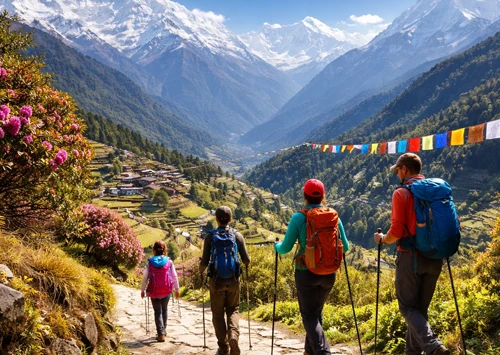
The walk is carried out in a remote setting, often far from roads and deprived of access to modern infrastructure. You will thereby cross suspension bridges, river valleys, alpine forests, and high mountain passes, making daily overnight stops in traditional villages. Many popular trekking routes of Nepal cross an elevation of 4000 meters, thus making acclimatization a crucial part of the journey.
Also, trekking is not just about walking in the Himalayas. It involves cultural immersion while encountering traditional Sherpa communities. The path is lined with ancient monasteries, prayer flags, prayer wheels, mani walls, chortens, and stupas, offering an in-depth introduction to Nepal's religion, lifestyle, and culture.
Besides that, trekking law is somewhat complicated in Nepal. If you are planning to trek in Nepal, the government mandates that you obtain trekking permits for the region you plan to trek in. In terms of safety, a licensed guide is mandatory, and travel insurance is required to support an emergency helicopter evacuation.
Features of Trekking in Nepal
- Long duration ranging from several days to multiple weeks.
- Challenging terrain with walking hours upto 8 hours per day.
- High altitude often 4000 metres and above.
- Requires proper physical fitness and preparation.
- Involves permits, guides and logistical planning.
Popular Trekking Options Ranked by Trekking Planner Nepal
- Everest Base Camp Trek: 14 Days
- Manaslu Circuit Trekking with Larke La Pass: 14 Days
- Everest Base Camp Trek with Helicopter Landing: 11 Days
- Annapurna Circuit Trekking: 17 Days
- Langtang Valley Trekking: 11 Days
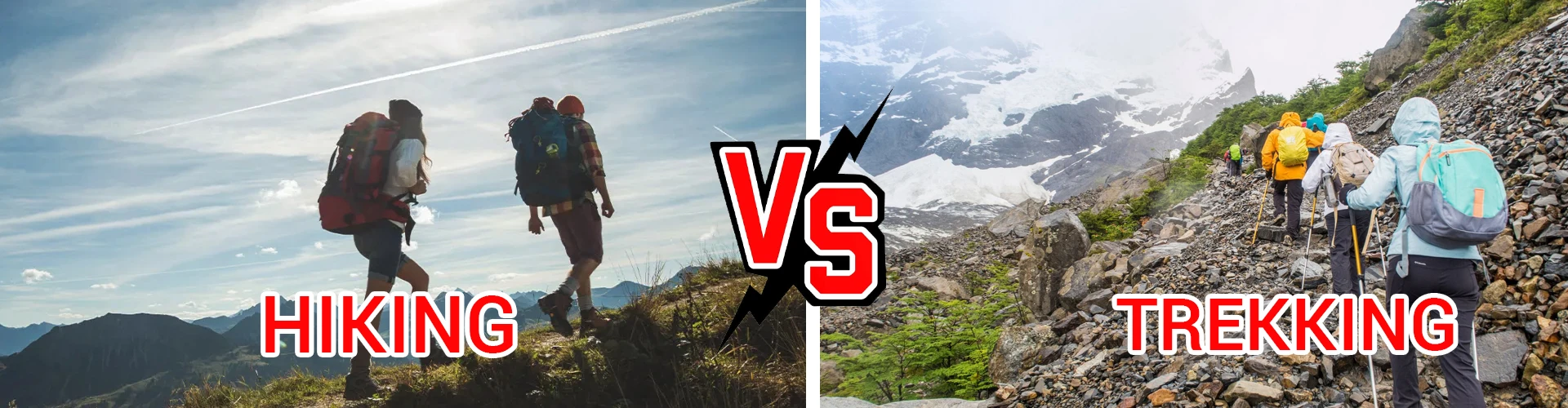
Hiking vs Trekking: Major Differences
For future travelers, understanding the major differences between Hiking and Trekking is essential for proper planning. Understanding the distinctions allows one to make an informed decision and choose an adventure that matches one's ability, expectations, and travel style. While differences between hiking and trekking can be understood through key factors such as duration, difficulty, terrain, required preparation and gear, altitude and acclimatization, cost, purpose, and experience.
Duration: Hiking is shorter than trekking. You can complete a hike typically in a day, but trekking generally requires walking for several days until you reach the destination.
Length: Hiking involves walking short distances, covering 4 to 50 kilometers. Treking generally involves walking long distances, covering more than 50 kilometres.
Difficulty and Terrain: Hiking is significantly easier than trekking. Hiking involves walking in a natural setting along a well-marked route. But trekking is difficult and requires walking on dirt roads, rocky trails, glacial fields, snow, and even into the wilderness.
Preparation and Gear Required: Trekking requires specialized gear such as boots, a down jacket, trekking poles, layered clothing, and, sometimes, camping equipment. However, hiking requires minimal gear: comfortable shoes, snacks, water, and a day bag.
Note: For a complete list of gears and equipment required for trekking in Nepal, visit our website at: https://www.nepaltrekkingplanner.com/suggested-equipment-list
Permits and Logistics: Trekking in Nepal requires permits from the government of Nepal, such as the Annapurna Conservation Area Permit (ACAP) for Annapurna, the Sagarmatha National Park Entry Permit for Everest, and the Restricted Area Permit (RAP) for Manaslu. But no such permit is required for hiking in Nepal; you may only need to buy tickets for some specific routes.
Note: Check out the trekking permit and entry fees for Nepal at: https://www.nepaltrekkingplanner.com/trekking-permit-and-entry-fees
Altitude and Acclimatization: The maximum altitude during hiking in Nepal is about 2500 meters, so no specific days of acclimatization are required. However, trekking in Nepal takes you to an altitude of 4500 meters, where oxygen is very low. There is a high chance of Acute Mountain Sickness (AMS) if you ascend directly to such an altitude. So, your trekking itinerary should include acclimatization days to adapt the body to low oxygen levels and reduce the risk of altitude sickness.
Cost Comparison: Easily, hiking is much cheaper than in Nepal. Trekking requires money for multi-day overnight stops, gear, permits, hot showers, food, electricity, communication, and travel insurance, which makes the journey expensive.
Purpose and Experience: Hiking is mainly for pleasure, fun, and exercise, while trekking is for cultural encounters and scenic views and often involves personal interests.
Risk and Danger: Hiking poses minimal risks as compared to trekking and is often fun and enjoyable. However, trekking can take you out of your comfort zone, often involving walking in glacial zones, landslide areas, rocky terrain, and mountain passes. So, trekking requires intensive planning, working with a reputable trekking agency, and purchasing travel insurance for emergencies.
Hiking vs Trekking Comparison Table
Factors | Hiking | Trekking |
Duration | Few hours to one day | Multiple days to several weeks |
Length | Less than 50 kilometers | More than 50 kilometers |
Difficulty | Easy to moderate | Moderate to strenous |
Preparation | Basic preparation | Good physical fitness, mental stability and stamina |
Permit | No specific permits only ticket price at starting point | Requires specific permits according to trekking region |
Acclimatization | No acclimatization day allocated | Acclimatization day included in the itinerary |
Cost | Low budget activity | Moderate to high investment |
Purpose | Fun and enjoyable experience | Cultural encounter with scenic mountain view |
Risk | Low | Moderate, due to altitude and remoteness |
Safety | Generally safe | Requires route planning and safety measures |
Terrain Type | Well-marked trails along forest and village route | Rugged mountain trail, rocky paths, glacial fields, and high passes |
Altitude Level | Low altitude below 2500 meters | High altitude above 3500 meters |
Daily Walking Hours | 2-5 hours | 6-8 hours |
Guide Requirement | Optional | Mandatory |
Accommodation | None | Teahouses, lodges, or camping |
Reward | Relaxation and enjoyment | Strong sense of achievement |
Best Short Hikes in Nepal (Beginner-Friendly)
- Balthali Village Hike
- Sarangkot Sunrise and Pokhara City Tour
- Nagarkot Sunrise and Hike to Changunarayan
- Budanilkantha Nangi Gompa Shivapuri Hike
- Champadevi Day Hike
- Pokhara Day Hiking
- Dhulikhel Namobuddha Day Hiking
- Hike to Chitlang Indra Sarovar
- Nagarkot Sankhu Day Hiking
- Nagarkot Changunarayan Day Hiking
Popular Multi-Day Treks in Nepal (Classic Himalayan Adventures)
1. Mount Everest (Sagarmatha) Region:
i) Everest Base Camp Trek

- Duration: 14 Days
- Max Altiude: 5545 m
- Difficulty: Moderate
This legendary trip takes you through the heart of the Everest Region, providing stunning vistas of the world's highest peak as well as an opportunity to connect with the local Sherpa culture.
Check our package: Everest Base Camp Trek - 13 Days
ii) Gokyo Valley Trekking
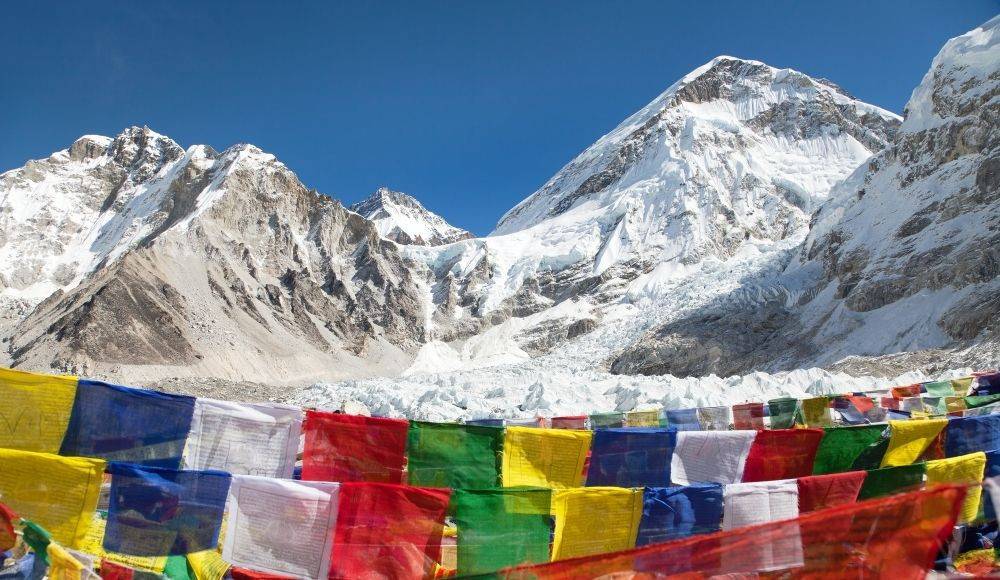
- Duration: 15 Days
- Max Altitude: 5463 m
- Difficulty: Moderate
This walk takes you to the pristine Gokyo Lakes, a succession of turquoise glacial lakes encircled by high hills that offer a different perspective of the Everest region.
Check our package: Gokyo Valley Trekking - 15 Days
iii) Everest High Pass Trekking
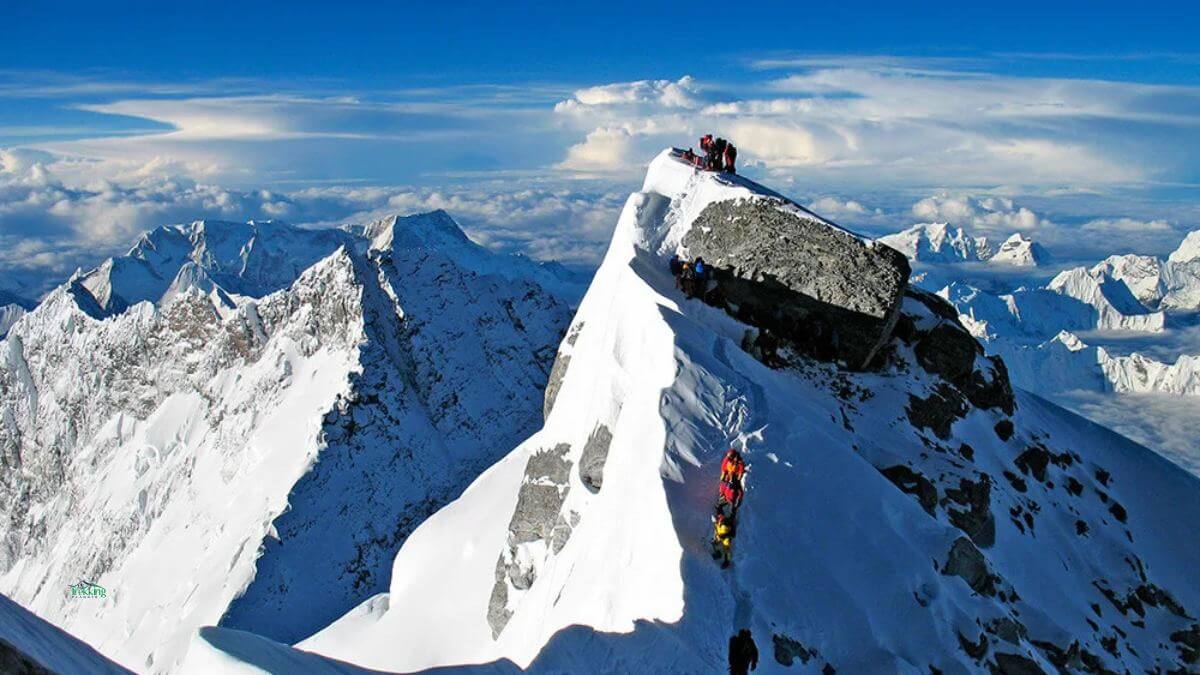
- Duration: 21 Days
- Max Altitude: 5545 m
- Difficulty: Advance
This demanding trip spans three high mountain passes in the Everest region, providing spectacular views and a one-of-a-kind experience for experienced trekkers.
Check our package: Everest High Pass Trekking - 21 Days
2. Annapurna Region
i) Annapurna Circuit Trekking

- Duration: 17 Days
- Max Altitude: 5416 m
- Difficulty: Advance
This walk, known for its varied landscapes, circles the Annapurna Massif, taking you through lush forests, parched valleys, and picturesque villages.
Check our package: Annapurna Circuit Trekking - 17 Days
ii) Annapurna Base Camp Trek
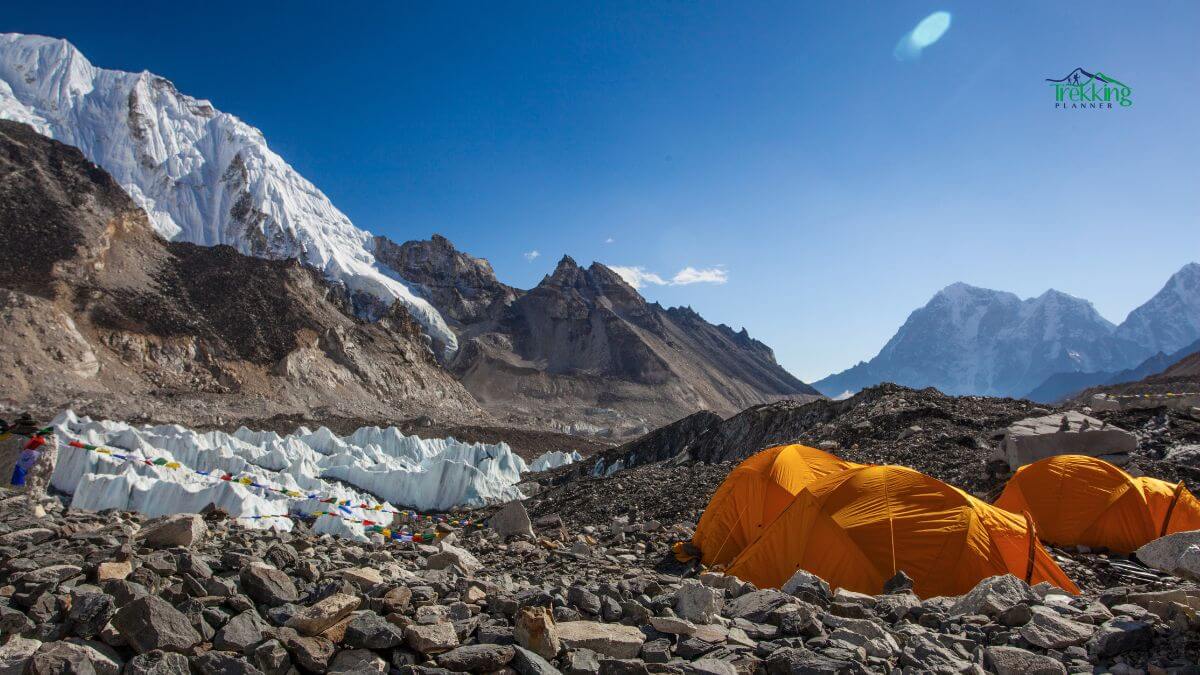
- Duration: 15 Days
- Max Altitude: 4135 m
- Difficulty: Moderate
A walk to the base of Annapurna I provide breathtaking mountain views as well as an opportunity to learn about the culturally rich Gurung and Magar populations.
Check our package: Annapurna Base Camp Trek
iii) Ghorepani Poon Hill Trek
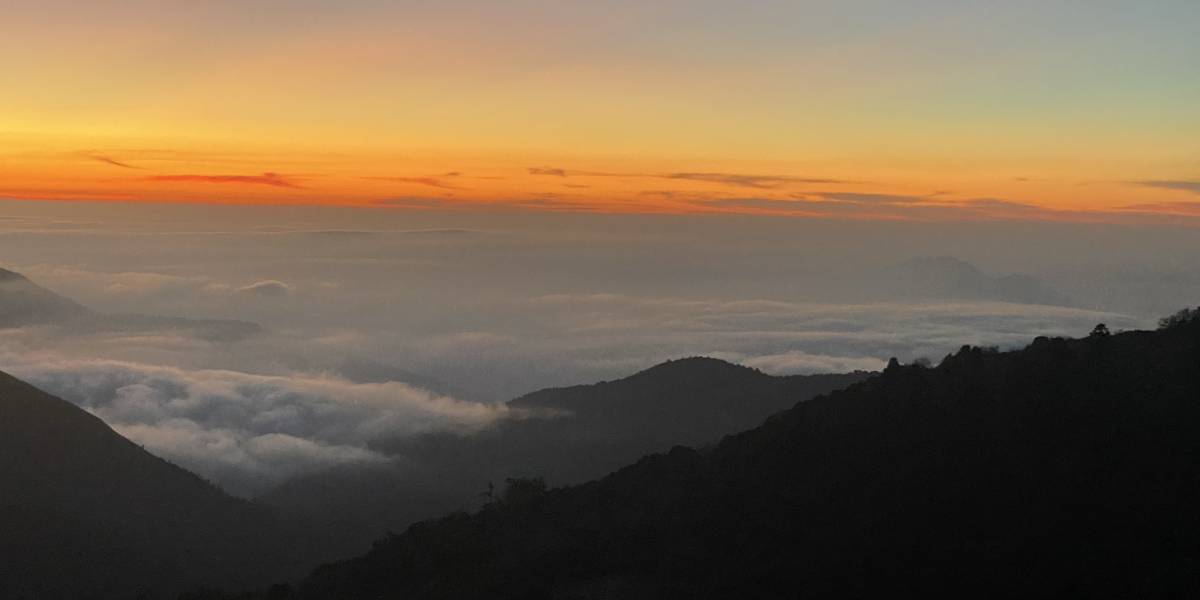
- Duration: 6 Days
- Max Altitude: 3210 m
- Difficulty: Easy
This walk, known for its breathtaking sunrise views from Poon Hill, is an excellent introduction to the beauty and culture of the Annapurna region.
Check our package: Ghorepani Poon Hill Trek - 6 Days
3. Mustang Region
i) Upper Mustang Trekking

- Duration: 17 Days
- Max Altitude: 3930 m
- Difficulty: Moderate
Explore the hidden kingdom of Upper Mustang, a unique and remote region with Tibetan-like scenery.
Check our package: Upper Mustang Trekking - 17 Days
4. Langtang Region
i) Langtang Valley Trek

- Duration: 11 Days
- Max Altitude: 4984 m
- Difficulty: Easy to Moderate
This walk near Kathmandu provides a combination of woods, terraced fields, and high-altitude meadows, as well as views of Langtang Lirung.
Check our package: Langtang Valley Trekking - 11 Days
5. Manaslu Region
i) Manaslu Circuit Trekking with Larke La Pass

- Duration: 14 Days
- Max Altitude: 5215 m
- Difficulty: Moderate
This route encircles the Manaslu Massif and offers varied scenery and cultures, making it a less congested option to Everest and Annapurna.
Check our package: Manaslu Circuit Trekking With Larke La Pass - 14 Days
ii) Manaslu Tsum Valley Trekking

- Duration: 25 Days
- Max Altitude: 5215 m
- Difficulty: Moderate
Discover the magical Tsum Valley, a secluded place soaked in Tibetan Buddhism and decorated with monasteries and stunning vistas.
Check our package: Tsum Valley And Manaslu Circuit Trek - 20 Days
6. Eastern Nepal
i) Kanchenjunga Base Camp Trekking

- Duration: 24 Days
- Max Altitude: 5230 m
- Difficulty: Moderate
Travel to the base camp of Kanchenjunga, the world's third-highest peak, in Nepal's eastern area.
Check our package: Kanchenjunga Base Camp Trekking - 24 Days
Why Choose Trekking in Nepal Over Simple Hiking?
While hiking is a pleasant introduction to Nepal and provides an enjoyable experience, trekking provides a more immersive, rewarding, and transformative experience. Trekking in the Himalayas allows you to walk through the mountains and discover culture, lifestyle, traditions, and religion. Here are some of the key reasons to choose trekking over hiking in Nepal.
1. Unmatched Himalayan View
Trekking provides an opportunity to see snow-capped mountains. Trekking routes of Everest, Annapurna, Manaslu, and Langtang take you face-to-face with some of the iconic mountains. You will get to see eight of the fourteen highest peaks of the world in Nepal, which cannot be experienced through short hikes.
2. Cultural Immersion
One of the great advantages of trekking over hiking in Nepal is the cultural interaction. Trekking routes pass through numerous traditional villages where people live with a traditional lifestyle. You can experience their food, hospitality, culture, and religion through interaction. Similarly, along any trekking route of Nepal, you can see monasteries, chortens, mani walls, prayer flags, and prayer wheels showcasing the customs of Sherpa, Gurung, Tamang, and Magar communities.
3. True Sense of Achievement
Trekking is a challenging journey that impacts the body and mind. Long walking days, altitude gain, and varied landscapes create a desire to push human limits. So, crossing mountain passes and reaching the destination offers a powerful feeling of accomplishment. Reaching the top proves endurance, determination, and resilience.
4. Access to Remote Region
Hiking routes are often predetermined and close to roads and houses. However, trekking opens a door for parts of the Himalayas that are untouched. These areas are unique with fewer crowds and a strong connection with nature.
5. Greater Physical and Mental Benefits
Trekking offers greater fitness benefits than hiking. Trekking improves cardiovascular health, builds endurance, strengthens muscles, and increases mental resilience.
Why Choose Trekking Planner Nepal?
- A proven track record with excellent ratings (TripAdvisor)- Evidence of great operations.
- Prior experience in handling family groups with elderly and children.
- All-Inclusive Tours - Your choice, our commitment.
- Adventure specialist for small and large groups - Personalized attention and care.
- Seasoned, Qualified, Local Guides - At the top of their game.
- Healthy food and high-quality equipment- Qualitative stress-free enjoyment.
- Strong local management Trip assistance- A welcoming outdoor care.
- Whole Risk Management - Consistent-Reliable-Trustworthy.
- Witty and fast customer service - Always there for you.
- More trip selections with customized itinerary catering your need.
- Genuine Eco-conservation/social project - For nature lovers and you.
- Alternate Routes - Expect Agile Adherence.
Tips to Prepare for Your First Trek in Nepal
- Build Physical Fitness
- Choose the Right Trek for Your Experience
- Understand Altitude and Acclimatization
- Pack Smart and Bring Proper Gear
- Prepare Mentally
- Travel with a Professional Trekking Company
- Arrange Permits and Documentation
- Plan According to Season
- Stay Flexible and Respect Local Culture
- Start Your Journey with Confidence
Frequently Asked Questions (FAQs)
Is trekking harder than hiking?
Yes, trekking is harder than hiking. Trekking is a multi day journey which takes you through remote himalayan setting including diverse apline landscape which requires moderate to advance physical and mental fitness. So it is a challenging task as compared to hiking.
Can beginners do trekking in Nepal?
Yes, abosolutely. Beginners can do Annapurna Base Camp, Ghorepani Poon Hill, and Langtang Valley Trek with proper preparation, gradual acclimatization and guidance from a professional trekking company.
Do I need a guide for trekking in Nepal?
Yes, trekking rules in Nepal mandates a licensed trekking guide for trekking in Nepal. Guides ensures safety, proper navigation and compliance with local regulation.
Hiking vs trekking: which is better for fitness?
Both hiking and trekking is good for fitness. However, trekking provides a more comprehensive workout that involves longer walking hours, varied terrain, and higher altitude.
Ready to Experience the Difference? Book Your Nepal Adventure Today!
Hiking in Nepal is perfect for those who want a short escape from bustling city life. It is a short, fun, and enjoyable experience that offers beautiful views and fresh air. Trekking, however, goes beyond walking. The adventure challenges human limits and connects you with local communities. Which one you choose depends upon your time, fitness, and interest.
With Trekking Planner Nepal, your journey is not just about reaching the destination. It is about connecting with the communities and taking in one of the most beautiful views of the world. So pack your bags and join our experienced guides and strong porters for an adventure of a lifetime.